• If you are posting pictures, and they aren't posting in the correct orientation, please flush your browser cache and try again.

    Edge
    Safari/iOS
    Chrome

CWD conversations that are worth the time to watch

Nobody likes this, especially those on this forum who invest in growing bigger deer.

That's for sure. If the state makes the age structure so bad I can only chase 3 YO and younger deer I'm packing up my habitat skills and moving on..
 
That's for sure. If the state makes the age structure so bad I can only chase 3 YO and younger deer I'm packing up my habitat skills and moving on..
Ive said if gets to where we cant eat them and we are only head hunting for 3 yr olds, I'm buying a dozer and building a 15 acre farm pond. Doubt the hunting farm would be worth much to trade out for greener pastures at that point. Turn to fishing.
 
100% my opinion.

I in no way believe anyone in intentionally killed all the deer in that area. What I do believe is different about AR - that I never hear anyone mention - is the extremely low fawn recruitment rates in this state. Fawn recruitment in the Ozarks - NW AR - averages about .4 fawns per doe. That is among healthy deer.

In fact, I dont see the importance of fawn recruitment mentioned in conjunction with CWD hardly ever. The deer population in that area was not increasing prior to cwd in NW AR. When you add the increased mortality caused by CWD - combined that with low fawn recruitment already existing - the deer density has no way to go but down.

Back in 2016, when cwd was first detected in that area - the common practice in newly found cwd areas was to immediately jump in a reduce deer density. I think very little though was given to other factors.

I read a an article on fawn recruitment comparisons across the whitetail states a few years ago and AR was in the bottom five. When you add already existing low fawn recruitment, with targeted shooting in the early years, and then change the harvest regulations to aide in higher harvest - all that created the perfect storm to basically wipe out the deer herd.
What's dogging your fawn recruitment there?
 
What's dogging your fawn recruitment there?
I would guess a combination of coyotes, bobcats, and house dogs. But mostly coyotes and bobcats - fawn recruitment is low even in areas a long ways from folks houses
 
Regarding reasons for the spread of CWD I offer the following that suggests there may be more to the story than we know.

I grew up on a 8000 acre property in north east La. It is bordered on one side by the Ms. River which is over a mile wide at that point. Another border is Lake Yukatan which is very large. Lastly the other border is the river levee and on the other side of the levee is vast huge farm land. To my knowledge there isn't a deer breeder within a hundred miles and the property has the characteristics of an isolated island. There has always been a large deer ;population on this property.

Somewhere around 100-150 deer killed annually .A few years ago they detected CWD and have have had several cases every yr since. Every deer killed is tested. My question: How did it get there? Buzzards? Hawks? Something floating down the river? Prions already in the soil but CWD not detected till testing began? Seems to me this property defies the typical explanation of the spread of CWD and also suggests if it can show up there it will ultimately be everywhere, if it isn't already. The property does flood annually.

CWD has had no effect on the overall population. Female harvest are significant but have never been adequate. Naturally supplemental feeding was banned but no other practices mandated. CWD has also been detected across the river in Ms.

I'm in the camp that suggests there is more about CWD and its spread than we know and governmental " ready fire aim " practices are more apt to miss the mark than not. I'm also interested in more research on the idea that ag products...corn, soybeans, hay, alfalfa etc may be a contributor to the spread as mentioned before.
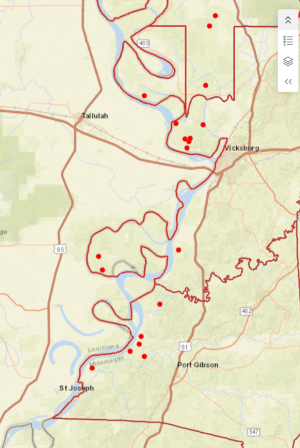
Yeah, that's the epicenter for CWD in Louisiana. They first detected it in Tensas parish in 2022. There have been 51 detections as of earlier this month in that parish. There have been 2 more positives in 2 other parishes. Right across the river in Mississippi, there have been detections since 2018. They say it likely arrived from there. It's plausible since they do often cross the river and the Mississippi River is a major travel corridor for deer. But, also the prions are water and particulate transportable, so the vast watershed could have dropped it off. Here's a map of some of the CWD positives in Mississippi right across the river from there.

1771942219859.png
 
Maybe tornadoes lofted soil into the air and transported the prions that way......just a guess
 
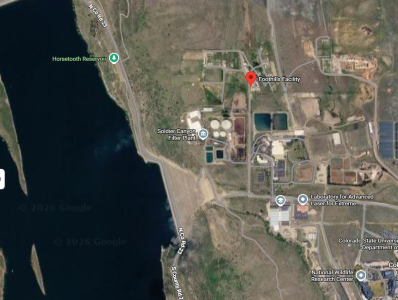
Maybe this is a reach, but I asked AI to locate the Fort Collins research center where CWD was first detected. Right next to it is Horsetooth Reservoir. That drains into the Cache la Poudre River.

I then asked where that drains into and the final destination. Here's what came back:

The Plains and Final Destination:

Once the river reaches the plains, it flows past the cities of Fort Collins, Timnath, and Windsor.

The Confluence:

The river continues eastward and passes north of Greeley. Its final destination is approximately 5 miles east of Greeley, where it merges with the South Platte River.

Ultimate Destination: Once it joins the South Platte, the water eventually travels across the Great Plains to the Missouri River, then the Mississippi River, and finally to the Gulf of Mexico

Here's a map of the facility right next to the Horsetooth Reservoir which flows all the way to the Gulf of America.

1771952932940.png
 
Our land is in Sauk County which is one of the hot spots for CWD. We have had 5 bucks 3.5+ test positive for CWD. I can say our population has grown in the last 5 years and is at a point where deer need to be shot to keep the herd in check.
I will say we dont have as many bucks reaching 5.5+ years old like we seemed to in the past. We do have a high hunter density and we know the 3.5 yr olds get hammered. I will say we have had on multiple occasions where we know a 4.5+ buck survives gun season and then vanishes once he sheds his rack. Did they all relocate? Did they die from CWD or something else?
 
I dug a little deeper:

How could a disease spread from fort collins colorado to the gulf of mexico by water?

A disease could spread from Fort Collins, Colorado to the Gulf of Mexico through a massive, interconnected river system that acts as a natural "liquid highway" for waterborne pathogens.

The Water Path
Contaminants starting in Fort Collins follow a specific downstream route spanning thousands of miles:
Cache la Poudre River: The journey begins here as the river flows through Fort Collins.
South Platte River: The Poudre merges with the South Platte east of Greeley, Colorado.
Platte River: In Nebraska, the South Platte joins the North Platte to form the main Platte River.
Missouri River: The Platte empties into the Missouri River near Omaha, Nebraska.
Mississippi River: The Missouri flows into the Mississippi River north of St. Louis, Missouri.
Gulf of Mexico: The Mississippi finally discharges into the Gulf south of New Orleans.

Mechanisms of Spread
Disease-causing agents can survive this journey through several environmental factors:
Waterborne Pathogens: Bacteria like E. coli or parasites like Giardia can be transported long distances, especially if they are protected within sediment or biofilms.
Flooding Events: Extreme weather can overwhelm wastewater treatment plants, causing sewage overflows that rapidly move high concentrations of pathogens downstream.
Agricultural Runoff: Pathogens from livestock or fertilizers can enter the Poudre River and travel through the heavily agricultural Platte River Basin.
Migratory Vectors: Aquatic animals or birds moving between these connected water bodies can carry and shed diseases along the entire route.

While most pathogens die off due to UV exposure and dilution before reaching the Gulf, hardy species or those introduced during massive flood events can bridge the distance.

Would you like to know more about the specific types of bacteria most likely to survive this long-distance river travel?

Yes. Could a prion survive this travel

Yes, a prion could survive the journey from Fort Collins to the Gulf of Mexico. Unlike typical bacteria or viruses, prions are misfolded proteins that are exceptionally stable and resistant to most forms of environmental degradation.
Research from 2024 and 2025 emphasizes that prions are "nearly indestructible" in natural water systems and would likely remain infectious throughout the entire 2,000-mile river journey.

Factors Enabling Prion Survival
Extreme Resilience: Prions can withstand years of exposure to environmental stressors including UV radiation, heat, and common disinfectants.
Sediment Binding: In river systems, prions "travel with a partner" by binding to fine soil and silt particles. This binding actually stabilizes the protein, protecting it from degradation and helping it persist in the water column or riverbed for long periods.
Proven Longevity: Studies have detected active prion "seeding" in environmental sediments more than a year after the original source of contamination was removed.

Mechanisms of Travel
Prions originating from infected wildlife (like deer with Chronic Wasting Disease) near Fort Collins would enter the Cache la Poudre River via:
Erosion: Rainfall and snowmelt washing contaminated soil into the river.
Direct Shedding: Infected animals shedding prions through saliva, urine, or feces directly into the water.
Decomposition: Carcasses of infected animals breaking down in or near the riverbed.

Risk Assessment
While prions could physically reach the Gulf of Mexico, they would likely be highly diluted by the time they arrived. However, because it only takes a minute amount to cause infection in a susceptible host, scientists are increasingly using river sediment as a tool for tracking the spread of these diseases across vast landscapes.

 
My kid has a chronic skull soaking in water as it mascerates. He dumps the water behind the house every 3rd day. That water can find its way to a little creek, then a larger creek, then a river, then the IL river, then the MS R. on its way to the gulf of America.
 
My kid has a chronic skull soaking in water as it mascerates. He dumps the water behind the house every 3rd day. That water can find its way to a little creek, then a larger creek, then a river, then the IL river, then the MS R. on its way to the gulf of America.
Exactly. People think it has to be deer to deer, or deer have to be in contact somehow. They wonder how it seemingly jumps from one place to another. Prions can travel by all sorts of methods. Birds, water, tornadoes, truck, train, plane, seeds, hay, vegetables, etc.
 
That suggests that everything from Ft. Collins to the gulf where any flooding takes place is exposed. Which would also hold true for waterways everywhere. Which also suggests when you couple water ways as a vector along with " particulate transfer ", hunters moving dead animal parts around, live animal transfers as well as normal animal movement, migratory carrion birds that fed on CWD infected animals....and the list goes on, CWD containment isn't likely. So either it is the end of the whitetail deer or not something we need to worry about. Or a shade of grey? Thats clear
 
Exactly. People think it has to be deer to deer, or deer have to be in contact somehow. They wonder how it seemingly jumps from one place to another. Prions can travel by all sorts of methods. Birds, water, tornadoes, truck, train, plane, seeds, hay, vegetables, etc.
When my kids get sick, I don’t move out of the house. I also don’t recycle their Kleenex. Pathogens spread via many vectors, much much more efficiently in some than others.
 
A potentially huge difference between WI and increasing deer numbers n cwd hot spot and AR and decreasing deer numbers in cwd hot spot

Fawn recruitment, WI. .84 fawns per doe

Fawn recruitment, AR. .38 fawns per doe - lowest of central and eastern whitetail states

The fawn recruitment numbers are statewide averages
 
Back
Top