• If you are posting pictures, and they aren't posting in the correct orientation, please flush your browser cache and try again.

    Edge
    Safari/iOS
    Chrome

White Spruce VS Norway

I used your order form above to order 32 Norway Spruce from Meeker County. They had the best prices of the SWCD offices I check on....and offered the potted trees...which many will not do. Thanks for the info Buck!! My SIL is going to pick them up for me....and help me plant them. Also getting matts and staples. My well is about two hose lengths from where we will plant these. Going to do two lines of trees about 16 feet apart and staggered on 16 feet between the trees. Make a screen from the building site. Likely use my tractor and 12" post hole bit to start the holes.
 
If you can swing it, I would recommend and Earthquake Auger with either a 6" or 8" drill head. For the 4 yr tn's this will allow you to get the depth and width of hole for spreading the roots out. It's about $300 and will same you alot of time and your back/shoulders. 😉


I've loved my 9" 3pt auger. I've got sandy loam on top of clay. I need to be careful not to make a hole that makes the roots set in water too long.
 
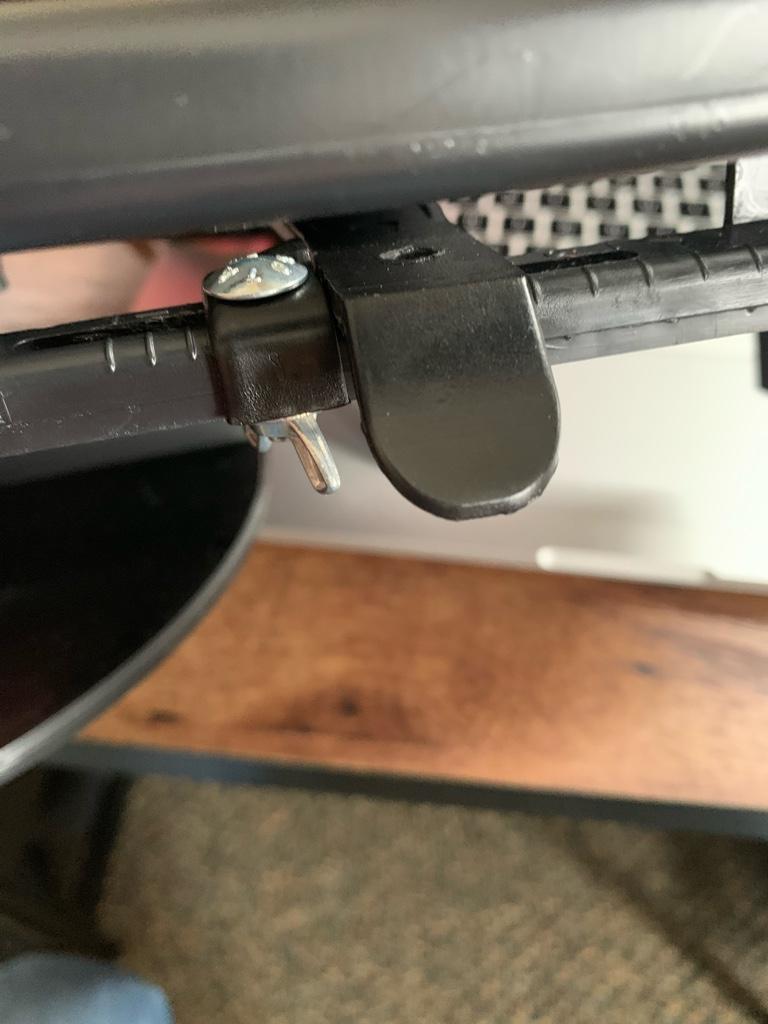
Must be like this to act as a stop?
e6e9f5201f39bc3e92b95d68a63ac2ef.jpg


Sent from my iPhone using Tapatalk

This is the right way.


Sent from my iPhone using Tapatalk
 
This is the right way.


Sent from my iPhone using Tapatalk

Thank you T! You’re a good man.


Sent from my iPhone using Tapatalk
 
I used your order form above to order 32 Norway Spruce from Meeker County. They had the best prices of the SWCD offices I check on....and offered the potted trees...which many will not do. Thanks for the info Buck!! My SIL is going to pick them up for me....and help me plant them. Also getting matts and staples. My well is about two hose lengths from where we will plant these. Going to do two lines of trees about 16 feet apart and staggered on 16 feet between the trees. Make a screen from the building site. Likely use my tractor and 12" post hole bit to start the holes.
Just thinking about my tree project a little.....and I need to get my post-hole auger back from a guy I loaned it to....two years ago. He was building a fenced yard around a swimming pool up at the lake. Pretty sure he is (finally) done with that auger. I have not needed it.....so I kinda forgot about it until now.

My son-in-law ordered some trees too....so we will do a joint planting project with the 1 gallon potted Norway spruce trees at his place and mine. I also got a new switch grass project going this Spring....and need to prep the land. Gotta squeeze the tree planting between the burn-down and planting efforts for the Switch. Planning is gonna be key as I don't get back from OZ until mid May.....and I hope to complete my planting by early / mid June.....while I still can catch some rainfall.

Planning to make more secure "compartments" in some larger food plots, and provide better bedding and cover......and for travel paths to some stands. I am hopeful that more screen and cover will provide some deer activity in daylight. Seems the hunting over food plot game has come and gone some years back. The past two or three years have proven that on my property. Time for changes.
 
Late to this thread, but my experience with conifers.

Have put in a lot of Norway, blue spruce, black hill and white pine.
Norway grow the fastest.
Blue spruce look the best.
Black hill are thick growing and great for around yard and buildings. They are susceptible to the fungus that hits in spring.
White pine can tolerate wet feet.
All of them need protection from deer until they get size to them.
I fertilize once in spring triple 10 around drip line, I spray black hills in spring for fungus.

My soil is heavy loamy clay.
Have ordered a lot of them from Cold Stream Farm out of MI.
 
Late to this thread, but my experience with conifers.

Have put in a lot of Norway, blue spruce, black hill and white pine.
Norway grow the fastest.
Blue spruce look the best.
Black hill are thick growing and great for around yard and buildings. They are susceptible to the fungus that hits in spring.
White pine can tolerate wet feet.
All of them need protection from deer until they get size to them.
I fertilize once in spring triple 10 around drip line, I spray black hills in spring for fungus.

My soil is heavy loamy clay.
Have ordered a lot of them from Cold Stream Farm out of MI.
Had white spruce get fungus issues too. Back coloration on needles and some needle cast. The ones that get less light seem to get it. Was 1 year and a wet one. But, spray anyway.
 
I got an all steel spade from A.M. Leonard that I really like. Bit pricey, but indestructible so far. Never could get the hang of a dibble bar.
 
Ive done both dibbler and dig method. Much prefer dig method. Not that much difference in time with lower quantities. Less root damage. I ammend with some topsoil, peat moss, and a little lime and ferilizer. Better results.

I fo add mulch. If not adding mulch csn see dibbler being better vs dead tree thst dried out.

I have only bought from nys tree nursery and local soil n water. They dont cone in great shape fron nys. Lical soil n water hand picks fron nys stock and hydrates with gel. Overall luck is about 60% or so.

Plant extras near water yo trandplant next year no matter what or where you buy.

Im pushing spruces limits in clay soil.
 
White spruce works really well for sandy loam soils and is very resistant to diseases and pests. Norway is similar does grow faster Both are good choices and will provide the screening needed or to make a plantation plus they make good lumber if your like me and have a sawmil.

Do not plant Scott’s pine or blue spruce. Scott’s pine does well early on, but up here in MN it fails after 30-40 years. It gets diseases and pests and just doesn’t survive to full potential lifespan. Maybe in states like Iowa or Illinois it might do better but I’ve never seen it do well MN, WI, or MI. It’s another ornamental it should stay as such.

Blue spruce (or Colorado blue spruce) is an huge ornamental. Leave it as an ornamental. It gets bugs, diseases, it is a cultivar and not a true natural tree species here, it is from the Rockies…can it work in a pinch, yeah, but if your end goal is habitat stay from it get the species that are native to your area.

The whole garden/nursery industry is one of the main reasons we now have rampant invasives and pests in our natural ecosystems, all of which makes it harder to control and more expensive for the landowner to control.
 
The whole garden/nursery industry is one of the main reasons we now have rampant invasives and pests in our natural ecosystems, all of which makes it harder to control and more expensive for the landowner to control.
Agree 100%. Public wanted "pretty" and "exotic" plants others didn't have years ago, when the push for oddball, non-native plants started. TOH was imported to the U.S. from Asia because it "looks tropical". Now TOH is a scourge across the country, outcompeting native trees & shrubs - and is the favorite food tree species for spotted lantern fly ....... another imported insect pest.
 
Agree 100%. Public wanted "pretty" and "exotic" plants others didn't have years ago, when the push for oddball, non-native plants started. TOH was imported to the U.S. from Asia because it "looks tropical". Now TOH is a scourge across the country, outcompeting native trees & shrubs - and is the favorite food tree species for spotted lantern fly ....... another imported insect pest.

Everything can be brought back to poor management and regulations by government and industry going off the rails. I'm pushing landowners in NW/Northern MN to start looking at harvesting or shrinking their ash components due to EAB. Most of the management plans don't even mention it that were written 10 years ago because Minnesota thought they were safe with our cold...we will get EAB, and we will eventually get Mountain Pine Beetle. The natural barriers that have protected us are no longer there. The great plains have protected us from Mtn Pine Beetle, but guess what is to the north of the Midwest, the Canadian Shield, and it is all pine and spruce. MPB doesn't care it will take and will infect any pine if the conditions are right.

Russian Olive bad!! Kudzu BAD!! Blue Spruce bad, all of these are bad. And than we have our native pests like Larch Beetle, Mountain Pine Beetle, Hemlock Agylid, Two-Line Chestnut Borer, Elm Disease (same thing that is happening in urban environments now is what happened in the 40-50s with Elm), Diplodia, Heterobisium (once you got, forget about planting pines for about 80-100 years), White Pine Blister Rust...

the list goes on...and it keeps getting longer every year. The sad thing is a lot of landowners are told they can plant a specific tree or plant and before you know it, it becomes either invasive, or its a secondary host to a fungus that affects native trees and species, or drives already current pests on the landscape to become a problem....none of which is thought of.

So me being a forester and land manager, and looking back at data from the 50s to the 70s in MN and WI, and seeing those cycles repeat again, and the government, being government and not acting or downplaying as usual, I have to put in some form of a gameplay in my plans for landowners that is looking 10-20 years down the road. You have to.

 
Do not plant Scott’s pine or blue spruce. Scott’s pine does well early on, but up here in MN it fails after 30-40 years. It gets diseases and pests and just doesn’t survive to full potential lifespan. Maybe in states like Iowa or Illinois it might do better but I’ve never seen it do well MN, WI, or MI. It’s another ornamental it should stay as such.

Scotch pine also loses all it's lower branches. It's not a good habitat tree for North America. I've also seen a lot of problems with blue spruce after 30-40 years, as in losing lower branches and then dying.
 
I think blue spruce gets some kind of rust fungus or blight. (Ethan???) I don't even see them at local landscaping places anymore.

Here, I've noticed for years that pines lose their lower branches as they age. We have loads of white pine at camp. By the time they get about a 4" diameter trunk, the lower limbs just crap out and they become fairly useless for ground-level cover and windbreaks - especially when they're closer together. Crowded white pines just go skyward - no ground cover. That's why we started planting spruce about 28 years ago. They keep their lower limbs much longer - especially when they aren't crowded. Better windbreaks and security / thermal cover.
 
Scotch pine also loses all it's lower branches. It's not a good habitat tree for North America. I've also seen a lot of problems with blue spruce after 30-40 years, as in losing lower branches and then dying.

Blue spruce I think in some areas has been pushed out of the customer sight because of public outreach and education from agency/or organizations on it being detrimental even in urban landscapes. Again this would be completely different if you were out west where it is native.

All conifers self thins lower branches as they age and compete for sunlight. This can be more so or quicker dependent on spacing. Generally for all trees, if you plant a tree with a lot of spacing and it’s neighbors or in the wide open you will notice a couple things 1) the diameter will increase 2) tree will not grow or will take much longer to grow to its expected height. There is no competition to push the tree to grow higher or lose their lower branches as all parts of the tree are getting enough sunlight.

When trees are planted closer together they can sense each other’s shade and the competition for sunlight is fierce! A grand survival strategy played out over decades. A tree must get the height advantage and than be able to spread its canopy over, effectively shading its competition and stunting their growth or killing them if it’s a species that requires full sunlight. For this lower branches like you see in white pine after they have gotten past a certain height, though relatively shade tolerant, immediately switch gears and shoot as high as they can to become giants. The lower branches would be useless in a white pine forest with how little little light comes down.

Look into mapleization that is common on east coast and eastern Midwest forests, if you want to see a good hardwood example of this.

This is getting into the very backbone of Silvics and Shade Tolerance/Intolerance of trees and why certain species are grown in even-aged (all one aged) or uneven-aged stands, why we do certain harvests for specific trees vs others, and really how forest succession happens whether helped by man or left untouched.
 
Last edited:
I’ve posted it before, but my best experience with any Spruce is (Black Hills Spruce). Great survival, medium growth. They do well on a variety of of soils.
 
I’ve posted it before, but my best experience with any Spruce is (Black Hills Spruce). Great survival, medium growth. They do well on a variety of of soils.
It seems that black hills spruce does retain the conical shape better than white spruce to provide that lower cover. I could see where a landowner could use both and have a black hills spruce on the outer edges.

I think with any windscreens that are enclosing a large or open area, some form of feathering habitat should be used on edges as well to create a gradient of low to higher cover.
 
Back
Top