

-
If you are posting pictures, and they aren't posting in the correct orientation, please flush your browser cache and try again.
Edge
Safari/iOS
Chrome
You are using an out of date browser. It may not display this or other websites correctly.
You should upgrade or use an alternative browser.
You should upgrade or use an alternative browser.
Ohio Farm Tours
- Thread starter Buckhunter10
- Start date
Buckhunter10
5 year old buck +
Buckhunter10
5 year old buck +
I never could have imagined that writing a few occasional blogs about soil health, food plots for deer, and my tomato garden would lead to the opportunity to present in the great state of West Virginia.
Recently, I had the honor of speaking to an outstanding group that included members of NRCS and the West Virginia Deer Association. I am incredibly thankful for the opportunity to share my passion for soil health and deer management with such a dedicated and hardworking group of people. That truly is the heartbeat of America.
I am also grateful for the friends who made it even more meaningful. Mr Scott Limer and Mr. Timothy Roe and Mr. Brandon Waskey for the encouragement and support and making the drive to listen to my presentation.
And my best friend, who never hesitated and simply knew he would be there. We even got to tour his farm, which I had not been on in a while, before heading over together. He captured photos and video, and we shared a great day doing something we genuinely care about. Thanks for always being there for me Greg Croxford
Moments like that remind me how far a simple curiosity and a willingness to learn can take you, and I am forever humbled by the opportunities.
Never stop learning and never stop chasing your passion.
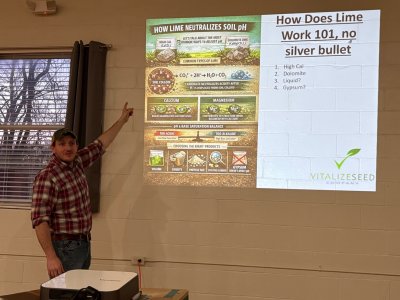
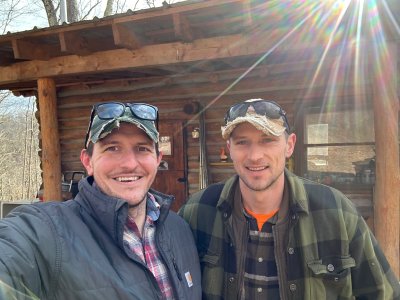
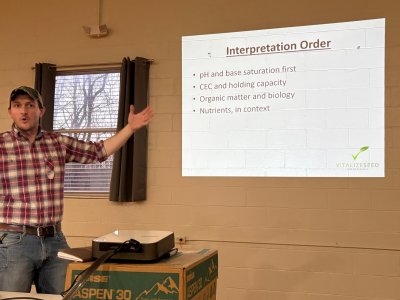
Recently, I had the honor of speaking to an outstanding group that included members of NRCS and the West Virginia Deer Association. I am incredibly thankful for the opportunity to share my passion for soil health and deer management with such a dedicated and hardworking group of people. That truly is the heartbeat of America.
I am also grateful for the friends who made it even more meaningful. Mr Scott Limer and Mr. Timothy Roe and Mr. Brandon Waskey for the encouragement and support and making the drive to listen to my presentation.
And my best friend, who never hesitated and simply knew he would be there. We even got to tour his farm, which I had not been on in a while, before heading over together. He captured photos and video, and we shared a great day doing something we genuinely care about. Thanks for always being there for me Greg Croxford
Moments like that remind me how far a simple curiosity and a willingness to learn can take you, and I am forever humbled by the opportunities.
Never stop learning and never stop chasing your passion.
Buckhunter10
5 year old buck +
Buckhunter10
5 year old buck +
Buckhunter10
5 year old buck +
2025 buck is ready - can’t wait to find another one for 2026!


Buckhunter10
5 year old buck +
Buckhunter10
5 year old buck +
Bryce insisted on this years buck being in his room - no complaints from dad! On to find the next one!



Buckhunter10
5 year old buck +
Can tillage actually increase soil organic matter?
Yes. But there’s a catch.
When soil is tilled, oxygen enters the system and microbial activity increases rapidly. Think of it like blowing oxygen on a fire. Microbes burn carbon for energy and release much of it as CO₂.
This is where the laws of thermodynamics show up in soil systems. Microbes must consume carbon to generate energy. If disturbance accelerates microbial activity, the only way organic matter can increase is if carbon inputs exceed what microbes are consuming.
In other words, you cannot increase organic matter through tillage alone. Organic matter increases only when carbon inputs exceed the energy released through microbial respiration.
Large cover crop biomass in a tilled system often acts more like microbial fuel than long-term carbon storage. The residue feeds microbes, but that same activity can accelerate the breakdown of existing soil organic matter through the priming effect.
Organic matter is fundamentally carbon-based. Simply adding large amounts of salt-based fertilizers does not increase organic matter. These nutrients may increase plant growth and yield, but they contain little to no carbon and do not add to the soil carbon pool.
If building soil organic matter is the goal, the system must increase carbon inputs through roots, crop residues, cover crops, manure, compost, or other organic materials.
No-till systems work differently. By reducing disturbance, they limit oxygen exposure and slow carbon oxidation. They also protect fungal networks that help build soil aggregates and stabilize carbon.
At the end of the day, soil organic matter comes down to a simple equation:
Carbon inputs vs microbial consumption.
If more carbon enters the system than microbes burn, organic matter builds.
If not, the soil eventually gives it back.
What are your thoughts on tillage vs no-till for building organic matter?
Yes. But there’s a catch.
When soil is tilled, oxygen enters the system and microbial activity increases rapidly. Think of it like blowing oxygen on a fire. Microbes burn carbon for energy and release much of it as CO₂.
This is where the laws of thermodynamics show up in soil systems. Microbes must consume carbon to generate energy. If disturbance accelerates microbial activity, the only way organic matter can increase is if carbon inputs exceed what microbes are consuming.
In other words, you cannot increase organic matter through tillage alone. Organic matter increases only when carbon inputs exceed the energy released through microbial respiration.
Large cover crop biomass in a tilled system often acts more like microbial fuel than long-term carbon storage. The residue feeds microbes, but that same activity can accelerate the breakdown of existing soil organic matter through the priming effect.
Organic matter is fundamentally carbon-based. Simply adding large amounts of salt-based fertilizers does not increase organic matter. These nutrients may increase plant growth and yield, but they contain little to no carbon and do not add to the soil carbon pool.
If building soil organic matter is the goal, the system must increase carbon inputs through roots, crop residues, cover crops, manure, compost, or other organic materials.
No-till systems work differently. By reducing disturbance, they limit oxygen exposure and slow carbon oxidation. They also protect fungal networks that help build soil aggregates and stabilize carbon.
At the end of the day, soil organic matter comes down to a simple equation:
Carbon inputs vs microbial consumption.
If more carbon enters the system than microbes burn, organic matter builds.
If not, the soil eventually gives it back.
What are your thoughts on tillage vs no-till for building organic matter?
Buckhunter10
5 year old buck +
What is nutrient cycling?
At Vitalize Seed we talk often about nutrient cycling because soil health is not built in a single planting. It is built through systems.
Nutrient cycling happens when one crop helps feed the next.
Plants capture nutrients and carbon while they grow. When that crop is terminated, grazed, or naturally breaks down, those nutrients return to the soil. The balance of carbon and nitrogen in those residues acts like a slow-release fertilizer that feeds microbes and supports the next planting.
The real balance is timing.
Residue needs to break down fast enough to feed the next crop, but not so fast that all the residue disappears. That surface thatch protects soil, feeds microbes, and keeps the cycle moving.
Management matters. Measuring browse pressure in food plots or biomass in cover crop systems before termination helps determine if seed rates should be adjusted up or down to maximize biomass, residue, and nutrient release.
When that balance is dialed in, nutrient cycling improves and soils continue to build over time.
That’s where Vitalize Seed comes in. We’ve worked to create that balance for you from one crop to the next, to the next, to the next. That’s why we call it our One-Two System.
At Vitalize Seed we talk often about nutrient cycling because soil health is not built in a single planting. It is built through systems.
Nutrient cycling happens when one crop helps feed the next.
Plants capture nutrients and carbon while they grow. When that crop is terminated, grazed, or naturally breaks down, those nutrients return to the soil. The balance of carbon and nitrogen in those residues acts like a slow-release fertilizer that feeds microbes and supports the next planting.
The real balance is timing.
Residue needs to break down fast enough to feed the next crop, but not so fast that all the residue disappears. That surface thatch protects soil, feeds microbes, and keeps the cycle moving.
Management matters. Measuring browse pressure in food plots or biomass in cover crop systems before termination helps determine if seed rates should be adjusted up or down to maximize biomass, residue, and nutrient release.
When that balance is dialed in, nutrient cycling improves and soils continue to build over time.
That’s where Vitalize Seed comes in. We’ve worked to create that balance for you from one crop to the next, to the next, to the next. That’s why we call it our One-Two System.
Buckhunter10
5 year old buck +
It has been such a blessing to chase these amazing animals most of my life!
The last 6 season have been a dream come true!
Cant wait to see what is next! Thankful to my wife and family for the support in this obsession.

The last 6 season have been a dream come true!
Cant wait to see what is next! Thankful to my wife and family for the support in this obsession.
Buckhunter10
5 year old buck +
When I first started this garden, my tiller couldn’t even break the ground. It bounced across the surface like a dirt track race on an August night, dust flying as high as the new house.
The soil was basically a brick factory.
I knew that with no-till practices, cover crops, and organic amendments we would start to make progress. What I didn’t expect was how quickly it would happen.
Today the soil is full of aggregation, living roots, and earthworms. The biology is coming alive and the tomato yields have been incredible.
Healthy soil doesn’t happen overnight, but when you feed the biology and let nature do the work, the transformation can happen faster than you think.
From brick to biology.
I can’t wait to see what 2026 brings.
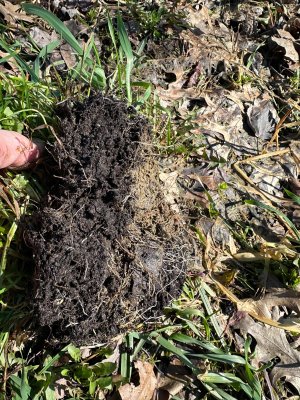
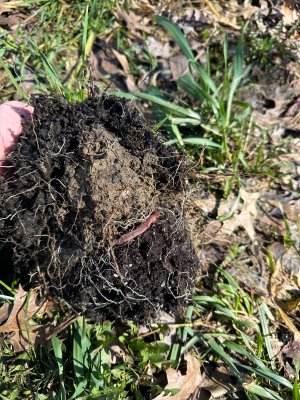
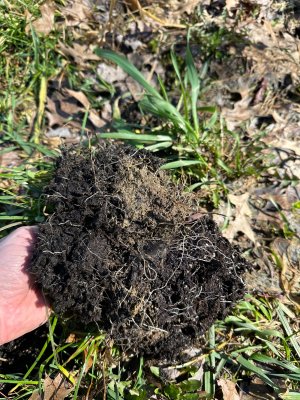
The soil was basically a brick factory.
I knew that with no-till practices, cover crops, and organic amendments we would start to make progress. What I didn’t expect was how quickly it would happen.
Today the soil is full of aggregation, living roots, and earthworms. The biology is coming alive and the tomato yields have been incredible.
Healthy soil doesn’t happen overnight, but when you feed the biology and let nature do the work, the transformation can happen faster than you think.
From brick to biology.
I can’t wait to see what 2026 brings.
Buckhunter10
5 year old buck +
There are a lot of opinions on clover seeding rates.
At Vitalize Seed, we typically recommend around 6 lbs per acre for perennial clover mixes. Sometimes growers go a little higher depending on conditions, but through years of trial, error, and referencing university research, one thing becomes clear.
Over time, clover stands tend to self regulate to around 8 to 12 plants per square foot.
Many extension sources note that mature white clover stands commonly stabilize around this density as plants spread through stolons and natural reseeding.
Because of that, there are really two different schools of thought when it comes to clover establishment.
Some growers seed very heavy, sometimes 12, 18, even 20 lbs per acre, and allow the stand to thin down naturally over time.
Others seed lighter, allow the clover to establish, and if needed frost seed the following year, which many people do regardless of stand density.
At Vitalize Seed, we also include a small amount of annual clovers as a nurse crop within our perennial clover blends. These establish quickly, help suppress weeds, and allow the perennial clovers time to get established.
The end result is often the same, a mature stand that settles into roughly 8 to 12 plants per square foot.
This topic sometimes gets framed as companies trying to sell more seed or less seed. In reality, it is usually just a difference in establishment strategy and management approach.
#soilhealth #covercrops #clover #regenerativeag #foodplots #vitalizeseed
At Vitalize Seed, we typically recommend around 6 lbs per acre for perennial clover mixes. Sometimes growers go a little higher depending on conditions, but through years of trial, error, and referencing university research, one thing becomes clear.
Over time, clover stands tend to self regulate to around 8 to 12 plants per square foot.
Many extension sources note that mature white clover stands commonly stabilize around this density as plants spread through stolons and natural reseeding.
Because of that, there are really two different schools of thought when it comes to clover establishment.
Some growers seed very heavy, sometimes 12, 18, even 20 lbs per acre, and allow the stand to thin down naturally over time.
Others seed lighter, allow the clover to establish, and if needed frost seed the following year, which many people do regardless of stand density.
At Vitalize Seed, we also include a small amount of annual clovers as a nurse crop within our perennial clover blends. These establish quickly, help suppress weeds, and allow the perennial clovers time to get established.
The end result is often the same, a mature stand that settles into roughly 8 to 12 plants per square foot.
This topic sometimes gets framed as companies trying to sell more seed or less seed. In reality, it is usually just a difference in establishment strategy and management approach.
#soilhealth #covercrops #clover #regenerativeag #foodplots #vitalizeseed
Buckhunter10
5 year old buck +
Plant protein percentages can be misleading.
Seeds and forages are often marketed by protein levels. 20 percent. 30 percent. Higher must be better, right?
But here is the real question.
How can a seed guarantee protein when the soil supplies the nitrogen and amino acid building blocks needed to create it?
Protein in plants is influenced by soil fertility, biological activity, nutrient balance, plant genetics, maturity stage, and even how the plant is sampled.
Lab tests often sample the entire plant, including stems and lignified tissue that deer rarely consume. This can dilute measured protein compared to what wildlife actually eats.
On the other hand, sampling only the tender leaves deer prefer and extrapolating that across the entire field can artificially inflate the true protein level per acre.
Two identical clover varieties planted in different soils can produce very different protein levels.
Healthy soils create better plants.
At Vitalize Seed we focus on building soil systems that improve nutrient cycling from one crop to the next. When the soil functions properly, plant nutrition follows.
Seeds and forages are often marketed by protein levels. 20 percent. 30 percent. Higher must be better, right?
But here is the real question.
How can a seed guarantee protein when the soil supplies the nitrogen and amino acid building blocks needed to create it?
Protein in plants is influenced by soil fertility, biological activity, nutrient balance, plant genetics, maturity stage, and even how the plant is sampled.
Lab tests often sample the entire plant, including stems and lignified tissue that deer rarely consume. This can dilute measured protein compared to what wildlife actually eats.
On the other hand, sampling only the tender leaves deer prefer and extrapolating that across the entire field can artificially inflate the true protein level per acre.
Two identical clover varieties planted in different soils can produce very different protein levels.
Healthy soils create better plants.
At Vitalize Seed we focus on building soil systems that improve nutrient cycling from one crop to the next. When the soil functions properly, plant nutrition follows.
Buckhunter10
5 year old buck +
Full NRCS post is up. Thanks to all who came and listened. I hope you find this useful!
Buckhunter10
5 year old buck +
Buckhunter10
5 year old buck +
Clover, alfalfa, and other heavy legume monocultures have a place in orchard, garden, and food plot systems. But over time, legumes increase available nitrogen in the soil. Combined with natural stand thinning, this creates an environment where grasses become more competitive. By year 3+, many folks start seeing more grass pressure.
You can manage this a few ways:
• Herbicide (traditional approach)
• Nurse crop like oats (we include this in our Clover Chic Oats blend)
• Overseed with a diverse fall mix like Carbon Load to capture excess N and cycle nutrients
And don’t forget, as stands thin, annual frost seeding is a powerful tool to keep fresh legumes coming. That new growth helps maintain density and outcompete grasses and weeds.

You can manage this a few ways:
• Herbicide (traditional approach)
• Nurse crop like oats (we include this in our Clover Chic Oats blend)
• Overseed with a diverse fall mix like Carbon Load to capture excess N and cycle nutrients
And don’t forget, as stands thin, annual frost seeding is a powerful tool to keep fresh legumes coming. That new growth helps maintain density and outcompete grasses and weeds.
Buckhunter10
5 year old buck +
Why Soil Test Recommendations Can Limit Your Success (Phosphorus Example)
Most soil test recommendations follow a simple formula:
Yield goal = nutrient needed minus nutrient in soil = fertilizer to apply
Let’s look at phosphorus in soybeans:
55 bushel soybeans
Typical removal:
0.8 lbs P2O5 per bushel = ~44 lbs needed
Now the soil test shows:
20 ppm phosphorus
So the recommendation becomes:
Apply ~40 to 50 lbs of P2O5
Sounds logical, but here is the problem:
That equation assumes all phosphorus is equally available and usable
It does not account for soil pH and tie up, organic matter releasing P over time, thatch and root biomass breakdown, microbial necromass, biology unlocking tied up P, or nutrients below the 6 inch sample depth
It also does not account for CEC and holding capacity, fertilizer placement, timing and soil temperature, mycorrhizal relationships, or stratification in no till systems
So what happens?
You apply phosphorus even if your soil may already have plenty, or you apply the wrong source, at the wrong time, or in the wrong place
Result is wasted dollars and limited response
The real question is not how much P do I need to add
It is why is my existing P not working
When you focus on the system like timing, soil conditions, biology, and crop demand, you can often apply less fertilizer and get more response
That is where products like No-Till Nurture fit, lower rates, biology driven nutrient movement, and improved efficiency in no till systems
This is also why at Vitalize Seed we now offer full soil consults, building a plan specific to your goals, your soil, and your system, while incorporating cover crops and jump starting biology for long term success.
Soil is not a container, it is a living system
Most soil test recommendations follow a simple formula:
Yield goal = nutrient needed minus nutrient in soil = fertilizer to apply
Let’s look at phosphorus in soybeans:
55 bushel soybeans
Typical removal:
0.8 lbs P2O5 per bushel = ~44 lbs needed
Now the soil test shows:
20 ppm phosphorus
So the recommendation becomes:
Apply ~40 to 50 lbs of P2O5
Sounds logical, but here is the problem:
That equation assumes all phosphorus is equally available and usable
It does not account for soil pH and tie up, organic matter releasing P over time, thatch and root biomass breakdown, microbial necromass, biology unlocking tied up P, or nutrients below the 6 inch sample depth
It also does not account for CEC and holding capacity, fertilizer placement, timing and soil temperature, mycorrhizal relationships, or stratification in no till systems
So what happens?
You apply phosphorus even if your soil may already have plenty, or you apply the wrong source, at the wrong time, or in the wrong place
Result is wasted dollars and limited response
The real question is not how much P do I need to add
It is why is my existing P not working
When you focus on the system like timing, soil conditions, biology, and crop demand, you can often apply less fertilizer and get more response
That is where products like No-Till Nurture fit, lower rates, biology driven nutrient movement, and improved efficiency in no till systems
This is also why at Vitalize Seed we now offer full soil consults, building a plan specific to your goals, your soil, and your system, while incorporating cover crops and jump starting biology for long term success.
Soil is not a container, it is a living system
Buckhunter10
5 year old buck +
How Low and High pH Impact Nutrients Even If You Apply Them
pH is the foundation of your soil solution
When pH is off, everything you add reacts differently
At low pH:
Iron and aluminum become more soluble
They bind with nutrients like phosphorus
So even if you apply fertilizer, it can quickly become unavailable
At high pH:
Calcium dominates the soil solution
Nutrients like phosphorus bind with it
Again reducing availability
So what is happening?
You are adding nutrients into a system
Where they are tied up before the plant can use them
This is especially true with highly soluble fertilizers
Result is nutrients in the soil
But not in the plant
Extreme pH also suppresses microbial activity
So even biology struggles to correct the system quickly
Remember, pH is just the starting point
It does not mean nutrients are present
But if pH is off and you are adding nutrients
You are far less likely to get full value from them
That is why balancing pH matters
Then manage how you apply fertility:
Source
Timing
Placement
Foliar applications can act as a spoon feed or help jumpstart biology
And this is why soil testing is critical
You need to understand your starting point
To make the best decisions for your system
pH is the foundation of your soil solution
When pH is off, everything you add reacts differently
At low pH:
Iron and aluminum become more soluble
They bind with nutrients like phosphorus
So even if you apply fertilizer, it can quickly become unavailable
At high pH:
Calcium dominates the soil solution
Nutrients like phosphorus bind with it
Again reducing availability
So what is happening?
You are adding nutrients into a system
Where they are tied up before the plant can use them
This is especially true with highly soluble fertilizers
Result is nutrients in the soil
But not in the plant
Extreme pH also suppresses microbial activity
So even biology struggles to correct the system quickly
Remember, pH is just the starting point
It does not mean nutrients are present
But if pH is off and you are adding nutrients
You are far less likely to get full value from them
That is why balancing pH matters
Then manage how you apply fertility:
Source
Timing
Placement
Foliar applications can act as a spoon feed or help jumpstart biology
And this is why soil testing is critical
You need to understand your starting point
To make the best decisions for your system
Buckhunter10
5 year old buck +
Why pH Adjustment Alone Is Not Enough
When we talk about improving soil, pH is usually the starting point
But pH alone does not tell the full story
pH tells you the acidity or alkalinity of the soil solution
As you adjst pH, you should also be looking at base saturations
Because this is what actually shapes your soil structure
Base saturations are the balance of calcium, magnesium, potassium, and hydrogen on your soil exchange sites
This must be viewed in the context of CEC
Your soil type determines how much it can hold and how it behaves
Low CEC soils respond quickly, but do not hold nutrients as well
High CEC soils hold more but change more slowly
Why does this matter?
Because different nutrients create different soil conditions
Calcium, with a larger ionic size, helps build structure and pore space
Magnesium, with a smaller size, can tighten soils when excessive
Calcium and magnesium are also antagonistically related
As one increases, the other is often reduced
So, while pH tells you the acidity or alkalinity of the soil solution
Base saturation tells you how the soil foundation is built or needs to be built
You can fix pH on paper
But still have tight soils, poor drainage, limited root growth, and reduced microbial habitat
When you balance base saturations within the context of your CEC
You improve aggregation, increase oxygen flow, enhance water movement, and create better conditions for roots and microbes
Consistency matters
Soil tests must be taken the same way every time
Same depth, same locations, same timing
Otherwise, you are comparing different data sets and making the wrong decisions
The goal is not just to adjust pH
It is to build a soil that functions
Because better structure leads to better roots, better roots lead to better biology, and better biology leads to better nutrient cycling
Soil is not just chemistry; it is structure, biology, and balance
When we talk about improving soil, pH is usually the starting point
But pH alone does not tell the full story
pH tells you the acidity or alkalinity of the soil solution
As you adjst pH, you should also be looking at base saturations
Because this is what actually shapes your soil structure
Base saturations are the balance of calcium, magnesium, potassium, and hydrogen on your soil exchange sites
This must be viewed in the context of CEC
Your soil type determines how much it can hold and how it behaves
Low CEC soils respond quickly, but do not hold nutrients as well
High CEC soils hold more but change more slowly
Why does this matter?
Because different nutrients create different soil conditions
Calcium, with a larger ionic size, helps build structure and pore space
Magnesium, with a smaller size, can tighten soils when excessive
Calcium and magnesium are also antagonistically related
As one increases, the other is often reduced
So, while pH tells you the acidity or alkalinity of the soil solution
Base saturation tells you how the soil foundation is built or needs to be built
You can fix pH on paper
But still have tight soils, poor drainage, limited root growth, and reduced microbial habitat
When you balance base saturations within the context of your CEC
You improve aggregation, increase oxygen flow, enhance water movement, and create better conditions for roots and microbes
Consistency matters
Soil tests must be taken the same way every time
Same depth, same locations, same timing
Otherwise, you are comparing different data sets and making the wrong decisions
The goal is not just to adjust pH
It is to build a soil that functions
Because better structure leads to better roots, better roots lead to better biology, and better biology leads to better nutrient cycling
Soil is not just chemistry; it is structure, biology, and balance
Similar threads


- Replies
- 15
- Views
- 1K
