• If you are posting pictures, and they aren't posting in the correct orientation, please flush your browser cache and try again.

    Edge
    Safari/iOS
    Chrome

Newbie Land Tour

I don’t have the smoking gun answer but I have been there. I had a property where the heart of it was apparently open ground in the 90’s. The resulting neglect left to years of undesirables taking over. Anywhere there was sunlight there was AO. And some being huge. If I did any tsi, AO would move in as soon as I turned my back. AO as a singular species is not an issue for deer. I’m sure they are agnostic to it. It’s when it takes over with its unforgiving branches that it makes it a deer desert. But it would grow and pop up so fast I could never keep up with so eventually it would win. Like I said, I don’t have the answers but that was my battle with it. I sold the property a couple years ago and honestly don’t miss it one bit.
 
I don’t have the smoking gun answer but I have been there. I had a property where the heart of it was apparently open ground in the 90’s. The resulting neglect left to years of undesirables taking over. Anywhere there was sunlight there was AO. And some being huge. If I did any tsi, AO would move in as soon as I turned my back. AO as a singular species is not an issue for deer. I’m sure they are agnostic to it. It’s when it takes over with its unforgiving branches that it makes it a deer desert. But it would grow and pop up so fast I could never keep up with so eventually it would win. Like I said, I don’t have the answers but that was my battle with it. I sold the property a couple years ago and honestly don’t miss it one bit.
Yes, I understand this. I've seen areas where it is unforgiving. Fortunately in my case it is present but not entirely overwhelming (right now). I may roll the dice a little and see if I can moderate it and work with it to some extent, largely because I think it would be unrealistic to extinguish it from the property for the reason's I discussed. It does provide much needed cover in my woods & I've routinely seen deer preferring those areas for bedding. I suppose if it really flushes up I'll have to get busy with a saw and sprayer or borrow my neighbors forestry mulcher.
 
Reaching out to the Habitat brain trust with what I predict may be a contentious topic.

So as I’ve mentioned prior, my back woods has a bit of an autumn olive presence. I’ve had plans to do some TSI for some bedding in some of the mature (but worthless) timber stands. I’ve refrained from doing so with concern of the autumn olive spreading.

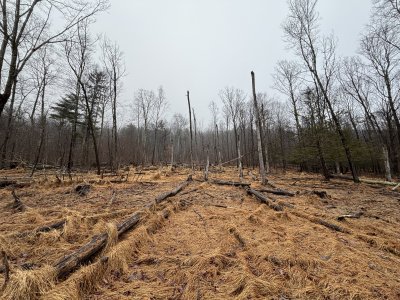
For reference, below is an old blow down where I’ve got AO. As you can see, it’s certainly present but not so thick it is impenetrable. First pic from the ground and second pic from the stand.

View attachment 90091View attachment 90090

Believe it or not, the areas where I have it must see 10x more deer traffic & bedding during the season just due to the cover it provides.

It may be sacrilegious, but I’ve been kicking around the idea of taking a few acres of mature hardwood & knocking down some trees and seeing what happens. Probably 3-6 acres, nothing so big that I couldn’t catch up to if things get out of hand. But frankly *in moderation* it has been a net positive compared to the existing mature timber where you can see 300yds any direction & turns into a desert after the first good frost.

After 4yrs on this property these are the only places I’ll find deer after leaves drop. Plus I’ve got 3000+ acres around me full of the same stuff, to eradicate it is likely impossible. Maybe I should consider to moderate it & work with it given the circumstances? Or, maybe I’ve gone insane & need to stand corrected, and feel free to do so.

Thanks for the input
I'd probably go less than that to make it even more manageable at first just to see the response. I'd think about an acre with the expectation of coming back once a year to target whatever you don't want coming back would be a manageable plan. See the response and keep beating it back. Expand to other pockets once you're comfortable with the ongoing management of it.
 
I'd probably go less than that to make it even more manageable at first just to see the response. I'd think about an acre with the expectation of coming back once a year to target whatever you don't want coming back would be a manageable plan. See the response and keep beating it back. Expand to other pockets once you're comfortable with the ongoing management of it.
Good advice, thank you. I think I'll start little & monitor over the coming years & expand if it seems to be working & under control
 
I don't have AO, but we have buckthorn here. Some declare war on it in an attempt to eradicate it, but I only fight it in specific locations. It is bad stuff that can out compete some native shrubs, but it makes excellent deer cover. In SE MN, you have great hunting if you have the thickest cover around when gun season starts and buckthorn does that.

To answer your question, I'd probably remove the AO in areas that have beneficial shrubs and young trees that can provide similar cover that deer can utilize. I would not try to wipe it all out though as that may actually make your hunting worse.

We've been doing quite a bit of shed hunting recently, and the deer use in thick, nasty buckthorn thickets is crazy. My hunting would definitely get worse if I eliminated my buckthorn.
 
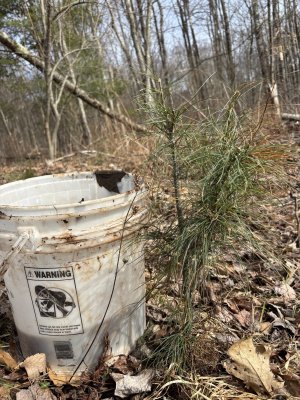
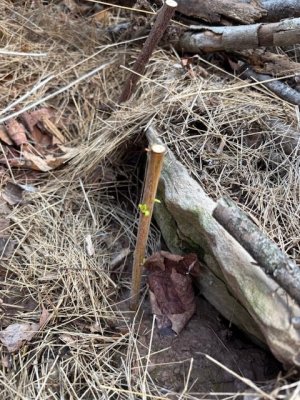
Our camp in NC Pa. mountains has been through several loggings in the past 30 years. If I were starting another logging at our place, this is what I'd do for security/ bedding cover that's native. I'd cage some of the stumps to get fast-growing stump sprouts that deer can't browse to death = cover & some browse. I'd also plant some white pine seedlings, which grow pretty fast for an evergreen - but keep them topped at about 6' so they get more thickly limbed & dense. Right after logging, I'd also plant several clusters of Norway & white spruce. They grow slower than white pine, but give you better bedding/security cover in the long run. They're great for windbreaks and thermal cover in cold weather. I'd plant a few gray dogwood & Washington hawthorn trees too - and cage them for a few years so they can get established. Very "limb-y" cover & browse.

I can tell you we've had good success keeping deer around in winter - really all year - with the spruce we've planted for cover after we logged. Shade in the summer - windbreaks/thermal/security cover in cold months. Planting them with open spaces between the clusters to grow, also allows grasses, forbs, weeds, and blackberries to grow in those openings. Good bedding and browse species in those openings. But in winter, with cold winds howling, those spruce areas are calm & quiet.

We had one small patch of AO at the edge of a field. Our local state forester told us to spray it with Triclopyr to kill it - which we did. He told us it would take over our woods eventually, and is now considered an invasive. That's our experience in big woods, 3 counties west of your location.
 
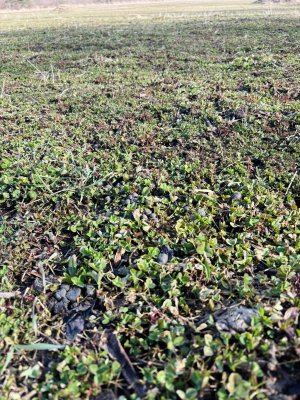
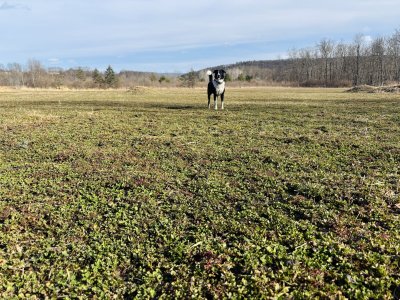
Spring is in the air (or at least a teaser of it) here in PA. Weather in the 50s all week, thousands of noisy geese flying N above, and my wife’s clover plot is showing some life.
IMG_3189.jpeg

IMG_3191.jpeg

I had intent to frost seed this field but I don’t think it needs it this year. I’ll likely throw those seeds elsewhere or save them for a future project.

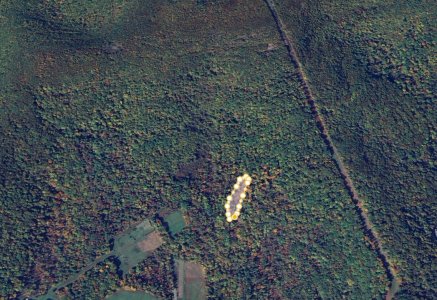
I’ve been back/forth on a few projects (some big some small) around the property - mostly trying to decide what I have the time & funds for. Possibly a big isolated food plot in an area that has blow down & has since been over run by stilt grass - would be a 2 for 1 project of sorts - improve forage options & begin to manage my invasives issue.

IMG_3178.jpeg
IMG_3188.jpeg
This is the potential site but it’s gonna require quite a bit of work to get it cleared out and prepped. Few minor projects like water holes & such I’d like to pair with it

Once that’s complete, I think I’ll transition my focus away from food & toward managing the invasives & begin working on better cover and bedding.

Food is my biggest draw just due to location. There’s a lot of ground around me, much of it with pretty good cover. I think my modest sized parcel will pale in comparison even with better bedding, I’m sure it’ll help, but likely won’t make a massive change. Food, however, has proven to bring them in pretty consistently. I think that’s the biggest lever I can pull right now.

Once I’ve got the big food plots dialed in I do intend to work on some better bedding zones, invasive control, and general forest diversity.

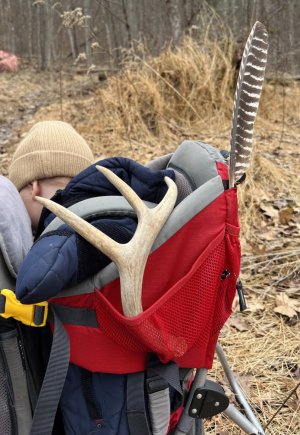
Spent Sunday with the little guy in a backpack carrier looking for sheds. We came home empty handed, but had a great time enjoying the outdoors & pleasant weather (and found some really good rut sign to boot).
 
Droppings in the clover is a good sign. Your plan sounds good, Newbie. Food is always good to have, and if surrounding woods/bedding is plentiful, you have the draw with your plots = traffic. At our camp (and surrounding camps to us) have found that planting separated clusters of evergreens improves bedding and security for deer. Does with fawns like to bed near those clusters, and travel between them for the security they provide.

Been there with you on the stilt grass. Takes repeated spraying, but worth it long run. Stilt grass & ferns ............ 👎
 
Droppings in the clover is a good sign. Your plan sounds good, Newbie. Food is always good to have, and if surrounding woods/bedding is plentiful, you have the draw with your plots = traffic. At our camp (and surrounding camps to us) have found that planting separated clusters of evergreens improves bedding and security for deer. Does with fawns like to bed near those clusters, and travel between them for the security they provide.

Been there with you on the stilt grass. Takes repeated spraying, but worth it long run. Stilt grass & ferns ............ 👎
There’s no shortage of droppings, that’s for sure. Looks like a cow pasture.

I think I’m gonna lean into the additional food plot this year as my main focus & start to chip away at the invasive which I’m sure will be a lifetime of management/mitigation.

My thought is: in its current state, I can convert to additional food rather easily while simultaneously addressing the stilt grass in that area of the property. If it doesn’t seem to help me get more mature bucks on the property, I can then cut timber, quit planting, let it grow into bedding if I decide to later. That same equation in reverse would likely be a lot more difficult & costly.

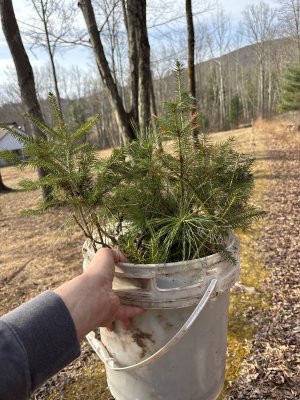
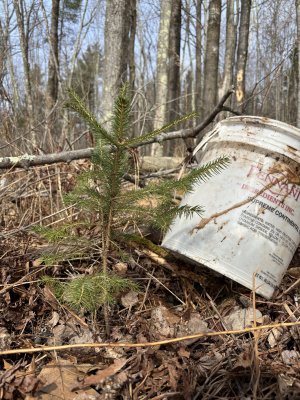
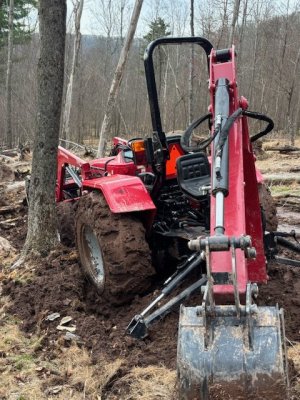
Nonetheless, I’m going to work on localized bedding zones with invasive control & planting some spruce trees & probably ROD. My property sets up very nicely for regions of bedding & food, although the access is incredibly difficult (long narrow parcel). My gears are turning & I have ideas but I’m trying to be thoughtful before I get carried away.

Likely walking the property with a few friends this spring to help flesh out some ideas & logistics. I have more ideas than I have time or money, so it’ll be an adventure over many many years I presume.
 
Newbie just remember the lower the canopy the more cover deer have at eye level. I have autumn olive and I just cut a trail through it and blow out the leaves and I can make deer go any where I want. Cutting 40 year popple really lowered my canopy and improved hunting the second year.
 
Back
Top