• If you are posting pictures, and they aren't posting in the correct orientation, please flush your browser cache and try again.

    Edge
    Safari/iOS
    Chrome

What should I do with this Pasture Ground?

What should I do with 65 acres of pasture to improve wildlife habitat?

  • Burn in late winter, Glyposate cool season grass in early spring, let the seed bank do the rest.

  • Hay it in summer, Glyphosate after first cut, let the seed bank do the rest.

  • One of the above options, but plant native grasses.

  • Look for another farmer who will turn some of it to tillage with cheap rent.


Results are only viewable after voting.

Oleo

5 year old buck +
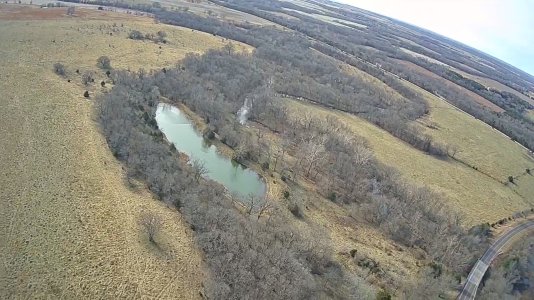
I picked up a new property. 130 acres in eastern KS - about half is pasture and half is creek bottom. My farmer says this ground isn't great for planting crops due to rocky soil and rolling hills. I plan to put in 5-10 acres of food plots. What would be the best path forward for the pasture area from a wildlife (deer/turkey) perspective? See poll for some ideas I've considered.

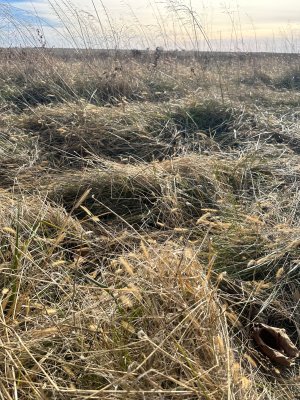
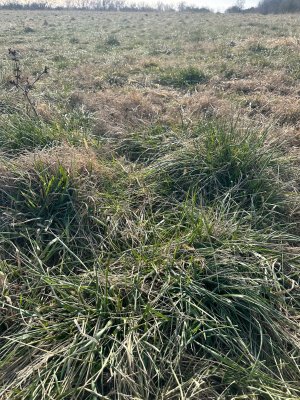
Picture of the property with a closeup of the grasses attached. I'm not great at grass identification, but this doesn't seem to provide much wildlife value.
 

Attachments

  • IMG_6983.jpeg
    IMG_6983.jpeg
    573.7 KB · Views: 21
  • IMG_6979.jpeg
    IMG_6979.jpeg
    1.2 MB · Views: 21
  • IMG_6978.jpeg
    IMG_6978.jpeg
    1.3 MB · Views: 21
Might be a good example of an area to let nature take it's course other than the food plots you manage. jmo
 
I have a fairly similar situation to you that I have been working on the last few years. I have been working with NRCS, Missouri Department of Conservation, and Pheasants Forever for help with expertise and cost-sharing. You can check out my land tour thread for more details. There are also several threads on old field management here that have even better info.

Ben and I are thinking the same. I would want to see what comes up naturally before spending much of my own money. I don't know if I would put all of my eggs in one basket, though. I would do sections of it over time to see what comes up. You may also regret where the food plots go as you learn more about the property (obviously, if you are already familiar with it, disregard this concern). The absolute fastest change you could make would be to burn and see what comes up, and then time some glyphosate apps in the next early spring to kill off any remaining cool-season forage species.

If you want or need the income from the bailing, you could section things into 5,10,20, acre sections. If you know that you are going to want native grasses and forbs, plan where the fire breaks are going to go. What makes the most sense for access trails that can be multi-purposed as firebreaks?

What are your end goals? What is neighborhood like?
 
I'd put in 10 acres of food plots and burn the remaining pasture to see what pops up naturally.
I'm not super experienced with burns, but I was thinking it would just come back as more cool season grass unless I sprayed that when it's a few inches tall. Do you think I'd get more variety after just a burn?
 
That sounds like a dreamy slate for habitat improvements to me! Sure, deep black topsoil with minimal rocks would be nice but cant win em all.

I definitely wouldnt do all of 1 thing or the other. A burn and cool season grass spraying in the spring sounds like a good start. I'd sure as heck be planting at least some switch grass, some old field management, and planting some trees. And if a farmer wants to row crop 30-40 acres of it in a manner that works for how you lay things out to hunt, that could be nice too.
 
I'm not super experienced with burns, but I was thinking it would just come back as more cool season grass unless I sprayed that when it's a few inches tall. Do you think I'd get more variety after just a burn?
The local Pheasants Forever biologist is having me do this with a few sections of cool-season pasture. If you time it right and follow up with glyphosate next early spring, you can really put a hurting on the cool-season species. In full disclosure, I have not done this yet and I am not sure if I will. Like you, I am not all that comfortable with burns.
 
I have a fairly similar situation to you that I have been working on the last few years. I have been working with NRCS, Missouri Department of Conservation, and Pheasants Forever for help with expertise and cost-sharing. You can check out my land tour thread for more details. There are also several threads on old field management here that have even better info.

Ben and I are thinking the same. I would want to see what comes up naturally before spending much of my own money. I don't know if I would put all of my eggs in one basket, though. I would do sections of it over time to see what comes up. You may also regret where the food plots go as you learn more about the property (obviously, if you are already familiar with it, disregard this concern). The absolute fastest change you could make would be to burn and see what comes up, and then time some glyphosate apps in the next early spring to kill off any remaining cool-season forage species.

If you want or need the income from the bailing, you could section things into 5,10,20, acre sections. If you know that you are going to want native grasses and forbs, plan where the fire breaks are going to go. What makes the most sense for access trails that can be multi-purposed as firebreaks?

What are your end goals? What is neighborhood like?
Thanks for the info!

My priority is habitat over hay income - that would just be a kicker if the it produced the same habitat outcome as burning and spraying.

My time horizon is fairly short. I got a good deal on the property, and I want to make the most habitat improvement possible in a year or two at which time I'll probably sell it. So my goal is to maximize wildlife habitat impact in a year or two time frame.
 
I don't know about invasives in the seed bank in KS, but in Ohio it would be a disaster to let the seed bank take over in much of Ohio would be a disaster.

I would burn it and plant something. I've seen a lot of credible suggestions for 2 lbs per acre of switch grass as your starting point, then plant trees and shrubs for cover and food. I would also plant for birds and beneficial insect to help overall health of the local ecosystem.

I would definitely put in some food plots too.
 
I know Kansas guys like to burn prairie and the results can be very impressive. I've never burned, so I can't offer any advice on the timing or frequency to get your desired results. I'm assuming there are plenty of guys in your general area that could tell you how and when to burn.

This spring I sprayed glyphosate on an area of cool season grasses in early April (in Minnesota) when the cool season grasses were only 4-6" tall. It worked unbelievably well, and I turned most of that section into a food plot that was sprayed again and planted with brassicas in mid July. I accidently skipped planting a few sections that were sprayed only in April and those areas were quickly dominated by a mixture of broadleaf weeds that offered much better wildlife habitat than the cool season grasses that were there previously.
 
I know Kansas guys like to burn prairie and the results can be very impressive. I've never burned, so I can't offer any advice on the timing or frequency to get your desired results. I'm assuming there are plenty of guys in your general area that could tell you how and when to burn.

This spring I sprayed glyphosate on an area of cool season grasses in early April (in Minnesota) when the cool season grasses were only 4-6" tall. It worked unbelievably well, and I turned most of that section into a food plot that was sprayed again and planted with brassicas in mid July. I accidently skipped planting a few sections that were sprayed only in April and those areas were quickly dominated by a mixture of broadleaf weeds that offered much better wildlife habitat than the cool season grasses that were there previously.
That’s what I would hope to happen - broadleaf weeds rather than grasses, but Telemark has a point that it’s hard to know what will come up after scorched earth. I’ve had my local state biologist look at my other property…. Maybe he’d have an educated guess of what to expect.

I’ve heard mixed results when people try to plant the wildlife mixtures, and some say it’s better to get what’s already on the seed bank…. Better results with less effort and money.
 
That’s what I would hope to happen - broadleaf weeds rather than grasses, but Telemark has a point that it’s hard to know what will come up after scorched earth. I’ve had my local state biologist look at my other property…. Maybe he’d have an educated guess of what to expect.

I’ve heard mixed results when people try to plant the wildlife mixtures, and some say it’s better to get what’s already on the seed bank…. Better results with less effort and money.
I agree - burning would probably be the lowest effort habitat improvement option, but I don't know if that will kill off the cool season grasses. Spraying in early spring will take out the cool season grasses, but it can be somewhat expensive.

I'd figure out a way to plant some food plots though as a few pictures of a big buck could significantly increase your sell price if you flip it in 2 years. Is baiting legal in Kansas? If so, pick up a few gravity feeders and a truckload of corn and skip the time and effort of making food plots that may fail.
 
No doubt that big buck pictures sell, but I do like the feeling of leaving it better than I found it. I think burning and spraying would take them out, I just don't know if I'll like what comes back in their place.
 
I can tell you from experience that leaving that untouched is going to have little to no wildlife value. Eventually it will be over taken by cedars Burning it without spraying the cool season grass regrowth/ new growth is only going to result in more cool season grass. First hand experience with ground that looks just like that, in the same part of the world. You can graze it, but that isn't going to increase the wildlife on it with your current grass cover. Depending on how long it has been in cool season grass you may or may not have enough native seed bank to produce much cover, you might have to replant the natives if you don't want to wait 20 years on it to look decent. Feel free to PM if you like I can help you a bit more if you want to provide some more info.
 
Easy. Read and dm @Native Hunter. Make 40-50 acres of native grass and forb habitat with strategic 10 acres of food plots. TSI the trees. Then kill monsters every year.

His land is almost the same size as yours.
 
One thing I will say about prairies - for mature bucks to use them in daylight, the species have to be tall enough to make the deer feel hidden as they travel. It doesn't matter if that is grass or forbs or a combination of both. If the species aren't tall enough, you may get lucky and see a mature buck occasionally, but it will be nothing like in one done right.

With that said, I would prefer to have a lot of forbs mixed in with the tall grasses, because when you mow shooting lanes in late summer, you will get a lot of tender regrowth before winter. So, you get a free food plot in your cover where you want to make a shot. I would call that a pretty nice setup. Deer will browse tender grass regrowth to some degree, but forbs mixed in sweetens the deal.

I would also consider the surrounding properties and try to make your property more desirable by providing what others don't have. What you choose to do would likely be better with a mixture of approaches. For instance, I have the only prairie and only orchard (containing apples, pears, persimmons, chestnuts, etc) within at least a 5 mile radius of my place. I also have at least 5 or 6 different species of oaks that are not found in my general area. While none of these things guarantee success, they obviously make a lot of difference.

You have a blank slate which is wonderful, because you get to design your success. One final thing - make sure you design things so that you can get in and out of your stands without being detected. Access is king.
 
I plant trees on every property I buy. If it’s a flip, the next owner will appreciate it !

A few acres of bedding, maybe some oaks, fruit trees? All options
 
Last edited:
Back
Top