Buckhunter10
5 year old buck +
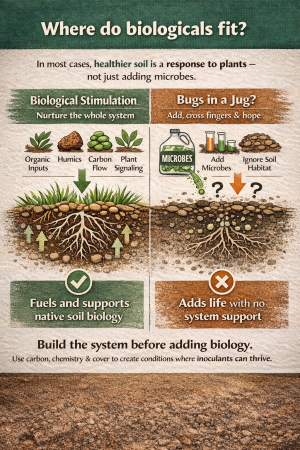
Where do biologicals fit?
Soil biology matters. Healthy soils are living systems. But biology works best when expectations are realistic.
In most cases, biological enhancement in the soil is a response to plants, not the addition of live microbes. Photosynthesis, living roots, and carbon flow are what fuel microbial activity. When plants are thriving, biology follows.
It is also important to recognize that a good response or no visible response does not always indicate whether something is working or not. Plant and soil systems are complex, and responses are influenced by weather, moisture, nutrient availability, and management. This is why we caution relying solely on anecdotal observations.
A visible response also does not always equate to improved plant health. Synthetic nitrogen is a common example. It can create rapid vegetative growth, yet that response does not always translate to better root development, reproductive growth, or long-term plant performance. The same caution applies to biological inputs.
At Vitalize, we often view biologicals as insurance policies, not the engine.
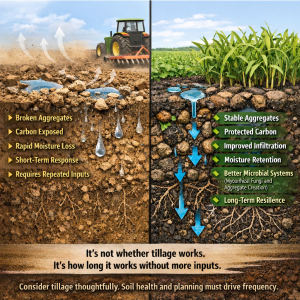
After tillage or herbicide use, fungal and bacterial networks are disrupted. These relationships will typically re-establish over time. The question is not if they return, but how long it takes. Targeted inoculation can help shorten that recovery window.
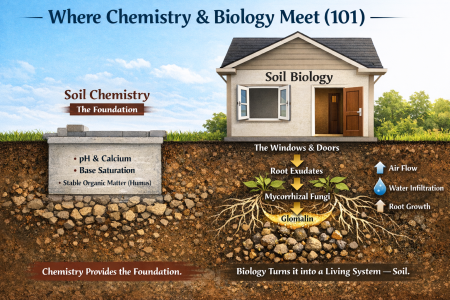
We also distinguish between biological stimulation and simply adding microbes. Supporting native biology through carbon, organic inputs, plant diversity, balanced chemistry, and reduced disturbance creates the conditions where biology can thrive.
Build the system first.
Let plants lead.
Use biology strategically.
Soil biology matters. Healthy soils are living systems. But biology works best when expectations are realistic.
In most cases, biological enhancement in the soil is a response to plants, not the addition of live microbes. Photosynthesis, living roots, and carbon flow are what fuel microbial activity. When plants are thriving, biology follows.
It is also important to recognize that a good response or no visible response does not always indicate whether something is working or not. Plant and soil systems are complex, and responses are influenced by weather, moisture, nutrient availability, and management. This is why we caution relying solely on anecdotal observations.
A visible response also does not always equate to improved plant health. Synthetic nitrogen is a common example. It can create rapid vegetative growth, yet that response does not always translate to better root development, reproductive growth, or long-term plant performance. The same caution applies to biological inputs.
At Vitalize, we often view biologicals as insurance policies, not the engine.
After tillage or herbicide use, fungal and bacterial networks are disrupted. These relationships will typically re-establish over time. The question is not if they return, but how long it takes. Targeted inoculation can help shorten that recovery window.
We also distinguish between biological stimulation and simply adding microbes. Supporting native biology through carbon, organic inputs, plant diversity, balanced chemistry, and reduced disturbance creates the conditions where biology can thrive.
Build the system first.
Let plants lead.
Use biology strategically.



 Earn on every purchase