
-
If you are posting pictures, and they aren't posting in the correct orientation, please flush your browser cache and try again.
Edge
Safari/iOS
Chrome
You are using an out of date browser. It may not display this or other websites correctly.
You should upgrade or use an alternative browser.
You should upgrade or use an alternative browser.
Stock Market is the bottom in?
- Thread starter Peplin Creek
- Start date

SD51555
5 year old buck +
Thanks fella. I really enjoy figuring these things out. I've always felt there was no sense in working hard if you didn't have a good plan to keep some of it. I felt that way all the way back to when I was a kid doing the absolute shittiest jobs to earn small amounts of money.That is really good info SD.
I have to start looking at that- I have a 457 that I need to see if I can start converting. I’m retired at age 58 so I have left it in the 457 so I can draw if I need to but I can easily afford to start converting.

Westwind
5 year old buck +
Some of these lessons are learned the hard way. I took profits last year on my NVDA. I knew I would pay taxes but seeing the actual numbers- it was a shocking amount. I thought about how hard it would be to pay those taxes if I had turned around and spent all that money. It was still poor planning on my part despite not getting into actual tax trouble.
It almost seems futile to earn money sometimes just to give so much back but having a good strategy to keep your money helps combat that defeatist attitude! Will be studying the above very soon! Wife and I will have no paychecks later this year for the first time since the 80’s and have yet to draw ss so maybe its a good time to start converting.
It almost seems futile to earn money sometimes just to give so much back but having a good strategy to keep your money helps combat that defeatist attitude! Will be studying the above very soon! Wife and I will have no paychecks later this year for the first time since the 80’s and have yet to draw ss so maybe its a good time to start converting.
Bowsnbucks
5 year old buck +
You're right. Maxing the matched contribution IS job #1. If anyone's employer matches them up to say, 10% of their own contribution, the employee gains 100% on their own contribution. You put in $100 - they put in $100 to match you. You doubled your money instantly. But the match is limited to whatever the contractual percentage limit is. If the employer match is $.50 on the dollar, you gain 50% on your contribution.I look at it this way- that 5% is an instant, guaranteed gain every time. Free money. And it contributes greatly to the magic formula of time and compounding.
I feel foggy today and my math sucks on a good day. Isn’t an employer match like a 50% gain in the market? If that is right, where else can you get a 50% guaranteed return?
I personally think maxing the matched contribution is job #1. When you get that rolling you expand your solutions.
If you make $100K, and your employer matches your contribution up to 5% of your salary, (which would be $5K), you gain another $5K instantly. Max out every year as your pay increases - if it does. But not all employers match that much ...... if at all.
Bowsnbucks
5 year old buck +
That's the perfect time to start saving & investing - when you're a young guy/kid and you start earning money. Time/years are your friend in the long run. "The miracle of compounding." You hit it 100% SD.Thanks fella. I really enjoy figuring these things out. I've always felt there was no sense in working hard if you didn't have a good plan to keep some of it. I felt that way all the way back to when I was a kid doing the absolute shittiest jobs to earn small amounts of money.
bigboreblr
5 year old buck +
Lets say you put 50 bucks a month in the market 25 years ago. 10% gains thats $542 bucks. Stay off marketplace, avoid the gunshop, avoid applebees. Thats alot of 50's.
I wonder what the Montgomery Burns's of Wallstreet got brewed for this week. Had an extra day off to scheme n plan.
Trying not to pull the chicken switch on my stuff and move it to something stable. Whatever that is these days..... Seems SCHD only lost 1% the past month or two.
Doubting AMD, Telsa, and Amazon. But holding the course. Still reading up on nukes. Liking GE verona every bit more I read. Awesome acient roman bathouse non electric emergency cooling system design. Rube Goldberg would be proud. Really hope to see a seminar about it someday.
I wonder what the Montgomery Burns's of Wallstreet got brewed for this week. Had an extra day off to scheme n plan.
Trying not to pull the chicken switch on my stuff and move it to something stable. Whatever that is these days..... Seems SCHD only lost 1% the past month or two.
Doubting AMD, Telsa, and Amazon. But holding the course. Still reading up on nukes. Liking GE verona every bit more I read. Awesome acient roman bathouse non electric emergency cooling system design. Rube Goldberg would be proud. Really hope to see a seminar about it someday.
Jerry-B-WI
5 year old buck +
Aren't there restrictions on using your money at 55? Something to do with years of service and age?One thing you can also look for, and this is beginning to catch on, is an in-plan conversion in your 401k. This allows you to 'convert' some of your tax deferred employer match dollars to the roth side of your plan. That takes some planning and budgeting, but it can quickly help get your asset tax balance back in whack.
1. Find out if you can in your company plan. Typically, those dollars have to be fully vested to keep it all clean.
2. You have to know where your income will end up at the end of the year, and be careful not to cause yourself some tax bracket creep, because what you convert is added to taxable income for the year.
3. Figure out how much you can afford to pay in taxes, and then divide that amount by your marginal tax rate. For example, if you can absorb a $5,000 tax bill and your marginal tax rate is 25% between state and federal, $5,000 / 25% = $20,000 conversion.
4. There are creative ways to finance that tax bill too, if you have more tax bracket room to use than you have dollars to pay the tax bill to use it up. One idea is a 401k loan to spread the cost over extra years. Other than some small admin fees, your interest paid on the loan goes back in your own pocket in a typical 401k plan. There are some timing things to consider. If your 401k is down 10% like a lot are right now because the air is coming out of tech, you could also be locking in a loss by taking a loan at the wrong time.
5. However, notwithstanding what I just said in #4, a market pullback is a great time to do a big conversion as well, because you can get more dollars 'under the fence' vs when the market is high. I did this with individual stocks years back. TD used to let you pick what assets you wanted to convert. When a stock I held fell in value, I'd quick convert it because the quantity of shares was always the same, but if it fell in price, the toll to get it across was smaller.
6. Timing is everything. You can do one right now, and you do not have to pay the bill for 12 months and ten days. Get a second opinion on underpayment penalties for income tax before you do this. I've been in the tax business my whole life and I still don't understand under-payment penalty and exceptions. My point is, you can get the benefit of the conversion today, and due to the timing of the tax deadline, you can defer the bill for it for up to 15.5 months (if you do it on January 2nd). You may need to wait until late in the year to really know how much room you have left in your tax bracket to use.
7. Spread it over multiple tax years. If you have a stable forecast for income, you could do a multi-year budget and do 2026 now, and do 2027 on january 2nd.
It took me 5 tax years to get my biggest 401k converted entirely to roth (this was after I left, so it went to a roth IRA). I set my budget and chose to adjust my paycheck withholding to pay for it. I happened to have extra cash laying around, so I went big and as fast as I could without causing bracket creep. Best thing I ever did. I was way behind on roth assets, and now it's far and away my biggest asset of all my assets, and i'm well ahead of target for roth assets for my age.
Now the last step I've got to get built up is a 401k that stays a 401k so I can have the option of using those dollars at 55, and I've also got to build out other assets so I can get out before that even. I'm 43, so I've got a good amount of time to steer this thing to where it needs to be.
Jerry-B-WI
5 year old buck +
I'd be careful about paying off a 5% mortgage too soon. If you know you can make more than 5% return in your 401 or a Roth IRA that's where I'd put the money.
With a couple of dependents and mortgage interest you should get a good write off on taxes. You could make an extra princapal payment on the mortgage with the tax return if you want.
I've been retired for 4 years and believe me taxes are a big concern. You have to be careful Roth conversions don't trigger IRMMA. You also have to figure out how you're going to pay for insurance if you retire early. Right now that cost is based on taxable income, and Social Security is considered taxable income.
I wish my employer would have had a Roth 401 while I was working. I would have stuck every penny into Roth.
With a couple of dependents and mortgage interest you should get a good write off on taxes. You could make an extra princapal payment on the mortgage with the tax return if you want.
I've been retired for 4 years and believe me taxes are a big concern. You have to be careful Roth conversions don't trigger IRMMA. You also have to figure out how you're going to pay for insurance if you retire early. Right now that cost is based on taxable income, and Social Security is considered taxable income.
I wish my employer would have had a Roth 401 while I was working. I would have stuck every penny into Roth.
SD51555
5 year old buck +
Aren't there restrictions on using your money at 55? Something to do with years of service and age?
Have a peak at this. I’d get final advice from someone whose neck is on the line from something like this.

What is the Rule of 55? | Fidelity
The Rule of 55 allows penalty-free withdrawals from a former employer's 401(k) or 403(b) during or after the year you attain age 55.
www.fidelity.com
Sent from my iPhone using Tapatalk
Jerry-B-WI
5 year old buck +
There's allot to consider when it comes to retirement. Where and how to invest, when to take S.S., both for you and spouse. Where to get health insurance and how to pay for it. IRMMA and RMD's.
If you plan on passing an inheritance, and what type of accounts that inheritance will be in. Your heirs may thank you or curse you.
If you plan on passing an inheritance, and what type of accounts that inheritance will be in. Your heirs may thank you or curse you.

rocksnstumps
5 year old buck +
The answer is mostly maybe. The feds allow the rule of 55 and most employers 401k policies follow that. However some employers 401k are not structured to follow that even though it is permissible. Most of the fortune 500 and big companies do. Some of the middling and smaller companies may not. You have to dig into the policy statement for your employer to find out.Have a peak at this. I’d get final advice from someone whose neck is on the line from something like this.
What is the Rule of 55? | Fidelity
The Rule of 55 allows penalty-free withdrawals from a former employer's 401(k) or 403(b) during or after the year you attain age 55.www.fidelity.com
Sent from my iPhone using Tapatalk
You can find more background perspectives on this at early-retirement.org. A good forum reference for these type of topics while using the search function
But if the rule of 55 is not available to you there is still the 72T option. Not as flexible on payments because you have pick a set amount and stick with it for X number of years but still gives you a way of funding early retirement if you can make it work. If you don't know what 72T is, Google can probably help but most do not go that way because of the hassle and less flexibility.
Last edited:
bigboreblr
5 year old buck +
My company throws in 500 into the HSA if I put 1000 in.
Can I use their HSA for the 1500 and get an investment HSA from another broker?
Can I use their HSA for the 1500 and get an investment HSA from another broker?
SD51555
5 year old buck +
My company throws in 500 into the HSA if I put 1000 in.
Can I use their HSA for the 1500 and get an investment HSA from another broker?
Should. There’s no vesting for HSA dollars. It can be a giant pain transferring dollars from one to another, but yes. I’m going on month three trying to get the last of my funds moved from work to Fidelity. Optum is far and away the worst HSA provider I’ve ever had. Fidelity has been the best.
Sent from my iPhone using Tapatalk
SD51555
5 year old buck +
The wheel strategy. Has anyone used it for buying puts/calls? What has your experience been?
Sent from my iPhone using Tapatalk
That’s what I do with puts. I never heard it called that. I call it a put-acquisition strategy. I’ve got one out there right now on PLTR. I won’t sell a put unless I’m comfortable getting the stock at that price.
I had considered doing it on Home Depot, but I didn’t want to risk not getting the shares, so I just bought them outright.
I like it a lot. If I’m in that gray area where I’d take it, but don’t want it badly, I will whack the puts over and over again, with the idea I will take it if I have to. That’s where Fidelity is above all others. When you have cash secured to cover a put, your cash, although locked up, still earns money market rates while backing puts. So if you’re getting a rate of return on the put, you can also add your money market rate to your rate of return.
Sent from my iPhone using Tapatalk
That’s what I do with puts. I never heard it called that. I call it a put-acquisition strategy. I’ve got one out there right now on PLTR. I won’t sell a put unless I’m comfortable getting the stock at that price.
I had considered doing it on Home Depot, but I didn’t want to risk not getting the shares, so I just bought them outright.
I like it a lot. If I’m in that gray area where I’d take it, but don’t want it badly, I will whack the puts over and over again, with the idea I will take it if I have to. That’s where Fidelity is above all others. When you have cash secured to cover a put, your cash, although locked up, still earns money market rates while backing puts. So if you’re getting a rate of return on the put, you can also add your money market rate to your rate of return.
Sent from my iPhone using Tapatalk
Thanks. Helpful. Two of my sons are using a modified wheel strategy (weekly cycle) and are averaging .75% return per week.
I’m more of a multi family guy, but I do have a fair amount sitting in a SIMPLE IRA that I’m considering testing a more active strategy.
Sent from my iPhone using Tapatalk
SD51555
5 year old buck +
Thanks. Helpful. Two of my sons are using a modified wheel strategy (weekly cycle) and are averaging .75% return per week.
I’m more of a multi family guy, but I do have a fair amount sitting in a SIMPLE IRA that I’m considering testing a more active strategy.
Sent from my iPhone using Tapatalk
.75%/week is outstanding returns! Good for them.
Sent from my iPhone using Tapatalk
bigboreblr
5 year old buck +
Still reading ip on options n stuff.
Thinking the renta hundred share game might be Hitachi and maybe Dakota gold. 29 a share on Hitachi.
They're picked for bill gates sodium reactor design. Bechtel is doing the work and they're privately owned. They do alot for the navy's nuke program
Thinking the renta hundred share game might be Hitachi and maybe Dakota gold. 29 a share on Hitachi.
They're picked for bill gates sodium reactor design. Bechtel is doing the work and they're privately owned. They do alot for the navy's nuke program
hunts_with_stick
5 year old buck +
That's my hope, retire at 58. 8 more yearsThat is really good info SD.
I have to start looking at that- I have a 457 that I need to see if I can start converting. I’m retired at age 58 so I have left it in the 457 so I can draw if I need to but I can easily afford to start converting.
SD51555
5 year old buck +
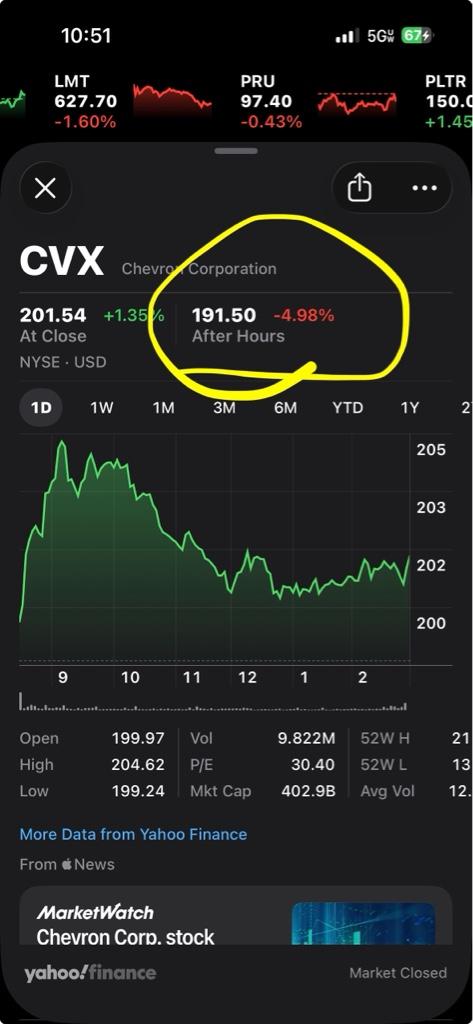
Put a pin in this post….
4/8 probably gonna be a low point on oil stuff in the short run. Do not forget how fast and contradictory the US position on this conflict has been. I’m not buying any because I have all I need on oil. There’s probably more money being made on oil futures than the war itself right now for regime insiders. Three days to catch up, buy a ton of oil futures, and get ready to violate the cease fire agreement after markets close Friday.
We won, it’s over, send help, screw NATO, we need to liberate the amazing Iranian people, we need to kill them all, the straight is open, it’s closed, we destroyed their navy, we can’t get it open, June 25’ we got their nukes, Feb 26’ we got their nukes, March 26’ we got their nukes, April 26’ we gotta go in and get their nukes.
Babba booey babba booey babba booey!
Sent from my iPhone using Tapatalk
4/8 probably gonna be a low point on oil stuff in the short run. Do not forget how fast and contradictory the US position on this conflict has been. I’m not buying any because I have all I need on oil. There’s probably more money being made on oil futures than the war itself right now for regime insiders. Three days to catch up, buy a ton of oil futures, and get ready to violate the cease fire agreement after markets close Friday.
We won, it’s over, send help, screw NATO, we need to liberate the amazing Iranian people, we need to kill them all, the straight is open, it’s closed, we destroyed their navy, we can’t get it open, June 25’ we got their nukes, Feb 26’ we got their nukes, March 26’ we got their nukes, April 26’ we gotta go in and get their nukes.
Babba booey babba booey babba booey!
Sent from my iPhone using Tapatalk
Similar threads
- Replies
- 18
- Views
- 755

- Replies
- 13
- Views
- 1K


