The Buck Pole: A Symbol of Success | An Official Journal Of The NRA
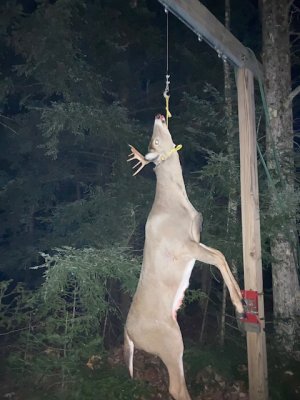
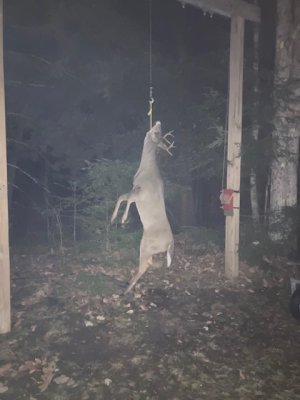
The camp buck pole is deer hunting’s enduring symbol of success and camaraderie.
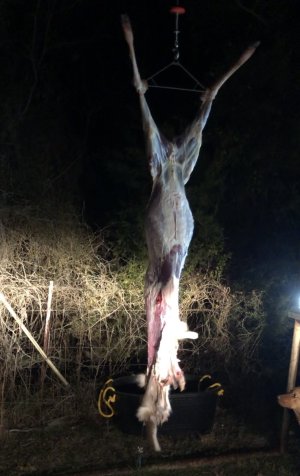
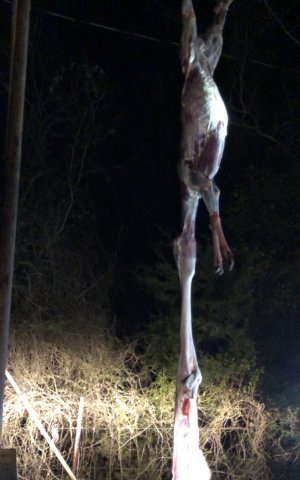
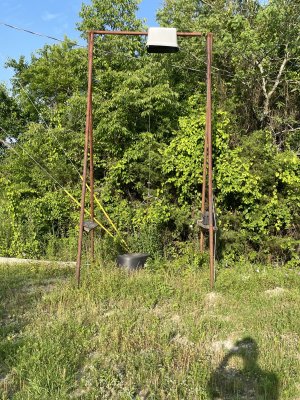
The buck pole’s crosspiece, whether chopped from spruce or salvaged from scrap pipe, is often the first thing hunters install in camp. It’s also the first thing repaired or replaced when the camp boss declares it weak or inadequate. Its purpose is vital, after all. When called on, it must stand strong and ready to serve; supporting all weight, individual or combined.
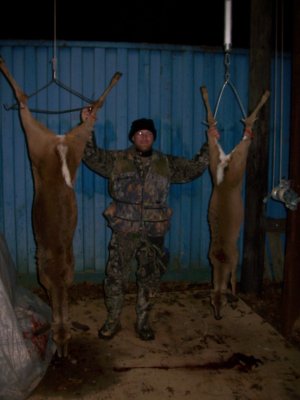
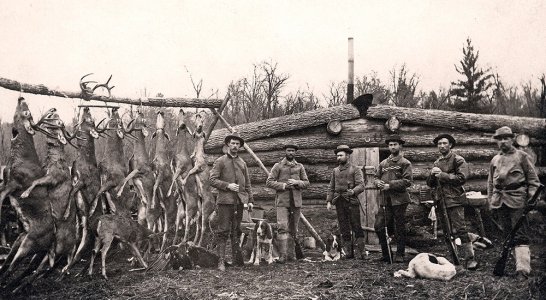
If the camp simply wanted a place to hang deer to cool, members would lash them to any stout branch or tree trunk. That’s fine for some camps, of course, but most prefer the permanence of buck poles. Length and strength matter, too. A proper buck pole holds several deer without bunching up, or pressing them into the supports. A little air between backs and briskets helps display the deer, individually and as a group.
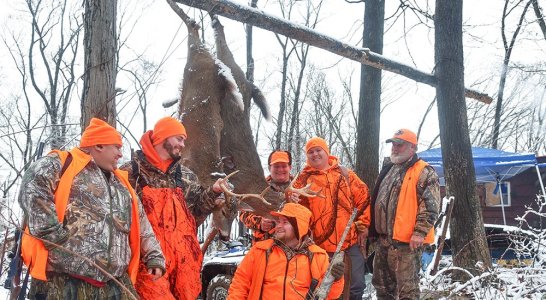
Well-arranged buck poles achieve a certain beauty and symmetry, with some camps arranging deer by size and sex, all facing one way. After all, a good buck pole isn’t all about utility. It’s where visitors linger to puff on pipes or cigars while assessing, admiring, even envying the deer, and comparing another camp’s success to their own.
What’s deer hunting and camp camaraderie without stories, questions and wisecracks shared at buck poles? In
The Sacred Art of Hunting, author James Swan wrote: “Hunters these days ultimately hunt memories as much as meat to put on the table. Memories feed dreams, and hunters must have dreams to stay motivated.”
Professor Thomas Heberlein, a longtime hunter and rural sociologist at the University of Wisconsin-Madison, notes that a big buck or first deer on the buck pole typically boosts efforts to celebrate a hunter’s success. A North Woods deer shot in November might hang several days, signaling your feat to every passerby, and requiring repeated storytelling.
All-American Feat?
Some hunters might ask, “Yeah, so what else is new?” Well, buck pole boasting isn’t necessarily a universal trait, even though it’s commonly American. After joining a “team” to hunt moose in Sweden in 1999, Heberlein wrote a research paper comparing those experiences with Wisconsin customs instilled at his family’s North Woods deer shack.
Heberlein’s paper, “
The Gun, the Dog and the Thermos: Culture and Hunting in Sweden and the United States,” noted that his Swedish friends find it inappropriate to show personal pride in a big moose. Heberlein also noticed he was the only one photographing the hunts, even after one member bagged a trophy moose.
The Swedes took pride in well-placed shots and questioned the purpose of each follow-up shot, but successful hunters didn’t pose with their moose or ask friends to take pictures for “the wife and kids.” Such omissions stood out to Heberlein, who grew up thinking it was routine, even expected, to photograph each other with “their buck,” either kneeling behind it on the ground or standing alongside it beneath the buck pole.
Heberlein’s new Swedish friends, however, quickly hung and butchered their moose. “Ownership of the animal and the ultimate success goes to the team,” Heberlein wrote. “The collective nature of the Swedish moose hunt focuses on the meat, not the trophy. After each hunt, dead moose were taken from the woods to a building with equipment to lift the animal, and the moose were quickly skinned, and the lower legs and head removed. Within two hours of falling, the moose was a hanging carcass.”
In contrast, the American buck pole prolongs the satisfaction of successful hunts. Some North Woods motels and lodges across the Great Lakes region maintain a buck pole near their parking lot, and encourage deer-hunting guests to use it. Likewise, once the snow and snowmobilers arrive, the same places invite guests to park their snowmachines there.
Yes, motel managers could tell hunters their deer will be fine in the back of their pickups overnight, but they see benefit in unique perks like a buck pole. Good businesses make customers feel welcome by reinforcing shared values.
After all, what’s more fitting in the North Woods than two field-dressed 4-pointers hanging from a motel’s buck pole? (Plus it’s less trouble for motels than accommodating guests’ dogs and cats.) Deer hunting’s public displays of accomplishment weave through the culture. During November’s deer seasons around Lake Superior, local radio stations read the “buck rolls” during morning, midday and evening news programs, along with details of each successful hunter’s deer, including its antler points and body weight.
Function Matters
Buck poles also serve practical functions, of course. It’s not all about show, pride and shared experiences. Doug Duren grew up in Cazenovia, Wisc., where he spent much of his youth working on the family’s dairy farm. He moved away after high school in the late 1970s, but kept returning each fall to hunt. He moved back to town with his wife in 2017 after buying a house on Cazenovia’s main drag, a mile north of the 400-acre family farm he now manages.
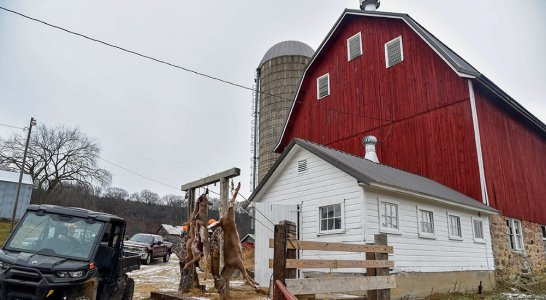
There Duren built a thinking man’s buck pole outside the farm’s milkhouse in summer 2019, as if conceding the end of dairy farming on the land and in his bloodline. The Durens gave up dairy farming in 1988, but the farm’s milkhouse remains, as does its iconic red barn and two silos by its side. One silo, symbolically enough, has lost much of its domed top; now torn aluminum sheets flap and rattle in winds gusting down from the oak ridges.
Duren is slowly converting the milkhouse into a butcher shop for himself and friends. Lest anyone forget the milkhouse’s roots, the final readings from its bulk milk-tank remain legible on the wall. Today, though, the milkhouse features two large stainless-steel tables he bought off Craigslist. Duren and his friends also installed a heavy-duty rail system on the ceiling above the west wall. The rails hold sliding meathooks for hanging entire deer or just their quarters.
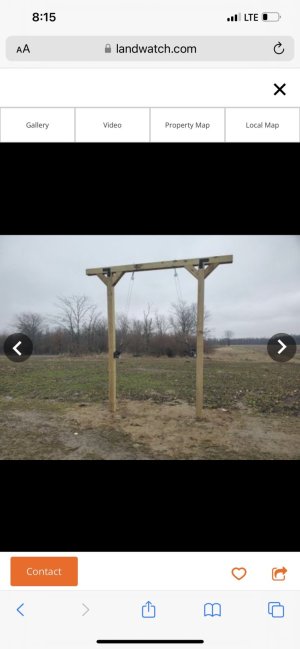
Most hunters, though, use the buck pole three steps from the milkhouse door. Yes, Duren’s buck pole is durable and practical, but it’s also rustic art. He sank two salvaged utility poles into the ground for its uprights, and mounted a long 6-by-8 treated timber for its crossbeam. Next, he installed five heavy-duty screw eyes for hanging deer.
For added convenience, he mounted a hand-cranked boat winch to the buck pole’s left upright. The winch lets you hang your deer by yourself, a task made even easier with pulleys Duren attached to three of the big screw eyes. The winch can also help skin a deer, whether it hangs from the buck pole or from the milkhouse’s ceiling rail. If your deer is cooling there on a meathook, simply slide the hook down the rail toward the door, where it stops within reach of the winch’s cable.
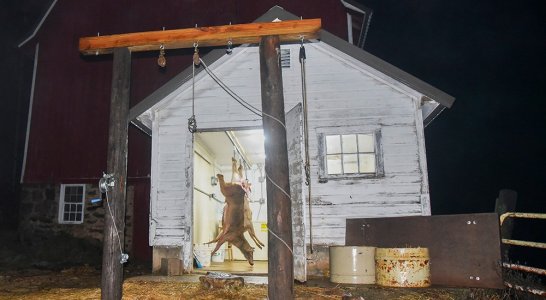
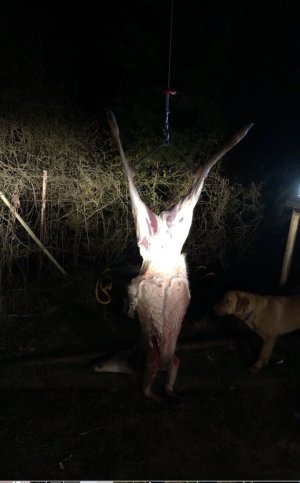
To skin your deer, just leave it on the buck pole or meathook, sever the legs at the knees, make your preparatory cuts to the hide and latch the cable to a chunk of hide. Next, crank the winch to peel off the hide. Whether you hang the deer by its head or from a gambrel between its hind legs, the winch makes for easy skinning.
As we said, this is a thinking man’s buck pole. Some folks see a buck pole as a tool for butchering, much as a carpenter views a sawhorse as a tool for sawing. Duren prefers a buck pole that charms whether empty or full, with hunters or without, in autumn or into winter.
Documenting Success
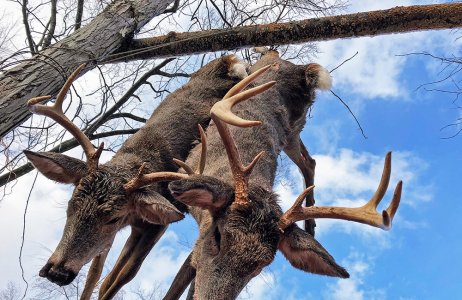
Most buck poles, however, aren’t integral parts of a personal butcher shop. They’re more a temporary holding area and deer-viewing site for deer camps. When the season ends or the hunters must return to work, the group pauses to record who’s present and what they accomplished. They gather again at the buck pole, take their photos and reluctantly strip the buck pole of its burden.
After all, shoulder mounts and European mounts strike some folks as odd curiosities. In
Old Glory: An American Voyage, the English author Jonathan Raban wrote about traveling down the Mississippi River in a basic 16-foot boat in the late 1970s. During his journey and visits, Raban was struck by the role taxidermists play in rural America. He noted that folks not only speak of “my doctor,” “my dentist” and “my lawyer,” but also “my taxidermist,” as if life requires this particular lineup.
Deer hunters see no shame or judgment in Raban’s observation. We value taxidermists who can preserve a whitetail’s nobility and beauty. We pay them to preserve our memories, which awaken whenever we admire their rich coats and brawny antlers.
Lawrence R. Koller captured such thoughts in his classic 1948 book
Shots at Whitetails, writing: “There hangs on the wall near me, looking out over my left shoulder, the head and huge antlers of the biggest buck it has ever been my good luck to bring to earth. Almost every time I glance that way, I can see again the flashing gleam of his 2-foot spread bobbing through the pines and over scrub oak in his last desperate dash for safety.”