

-
If you are posting pictures, and they aren't posting in the correct orientation, please flush your browser cache and try again.
Edge
Safari/iOS
Chrome
You are using an out of date browser. It may not display this or other websites correctly.
You should upgrade or use an alternative browser.
You should upgrade or use an alternative browser.
Earthworms not native to Minnesota?
- Thread starter Angus 1895
- Start date


rocksnstumps
5 year old buck +
Correct. They are mostly non-native and have been linked to the decline of tree species that need a heavy leaf litter on the forest floor to aid germination. They might have all sorts of pros for farming and soil benefits but they decompose a lot of the organic matter and are kinda considered a negative for North American forest regrowth. Same could be said for deer I guess. Certain groups love seeing high deer numbers but they are tough on tree and diverse habitat regrowth. Pros and cons on most everything.

rocksnstumps
5 year old buck +
Like nightcrawlers. Believe they might be European in origin
Here is some info from a number of years ago in another thread
Ok gonna stir the pot a little and post a little something about earthworms from Wikipedia. Spoiler alert, if some of your best friends are trees, you may not like some of your wormy friends.
BTW, in a garden or trying to grow foodplots worms are good.... just don't let your tree friends know how you feel!
From Wiki:
- Earthworms are migrating north into forests between 45° and 69° latitude in North America that have lacked native earthworms since the last ice age.
- These earthworm species are primarily from Europe and Asia, and they are disturbing many nutrient cycles.[2] By redistributing nutrients, mixing soil layers, and creating pores in the soil, they can affect the characteristics of the soil important to the rest of the ecosystem. Earthworms break up decomposing matter on the surface of the soil and carry or mix it into the surrounding soil, often carrying some of the nutrients deeper into the soil, where saplings and other young plants have trouble reaching them.
Influence on nutrient cycles and soil profiles[edit]
When organisms die, their remains fall to the forest floor, where they begin decomposing into their constituent nutrients.[6] In the absence of efficient detritivores such as earthworms, a thick layer of such organic matter accumulates. And most northern forests in North America lack native earthworms, which were largely wiped out when the ice sheets of the Wisconsin glaciation scoured much of the continent down to the bedrock. A deep detritus layer is thus characteristic of the native ecosystem of the region, and many native plants have evolved to rely on it.[2] As it slowly decomposes, it supplies nutrients, particularly potassium, phosphorus, and nitrogen, that are necessary for the production of cellular components such as carbohydrates, nucleic acids, and proteins; these nutrients are often a limiting factor in growth and maturation.[2] This provides for the growth of the trees, ferns, and smaller ground plants.
Effects on organisms[edit]
Without the nutrients available, some species that provide important biological niches to the ecosystem may be eradicated. In addition, young plants may be unable to grow without the surface nitrogen source provided by the layer of detritus.[5] Since young plants do not have the deep root systems that older trees have, they often cannot obtain enough nutrients to survive.[1] Thus, few saplings or under-canopy plants grow to full maturity and generally only the larger trees with extensive root systems survive. The addition of earthworms to an environment has been shown to decrease mycorrhizal associations with roots. This adds to the problem of finding available nutrients for plants.[3] Specifically, trees like poplar, birch, and maples are disfavored by the change in habitat, as are many forest herbs like Aralia, Viola, and Botrychium. These plants may be eradicated from the temperate forests after only months of the invasives' presence.[citation needed] Also, when a decrease in overall ground cover and canopy vegetation occurs, food for other organisms becomes scarce.[2] As a result, some organisms are forced to leave the areas, and the few plants remaining are often eaten shortly after germination.
With decreased ground-level vegetation, many terrestrial organisms like insects, small mammals, and other vertebrates must compete for fewer resources, leading to decreased diversity and population.[9] In addition, the native species of worms may be unable to compete with the introduced species because the native ones are not well adapted to the new conditions of the forest soil.[6]
Generally, with the addition of earthworms to a forest, a decrease in diversity is observed, and often other exotic species follow that can survive the nutrient diminished environment better than the natives. For example, in newly invaded forests buckthorn and garlic mustard, both invasive species, increase notably in population density.[3][9] To summarize, there is a decrease in diversity, seedling populations, forest floor organic matter volume, and overall habitat quality. In addition, there is often an increase in invasive species and decreased diversity of non-plant organisms.
Confession: Not an Ag farmer but I am a tree farmer and in forestry circles this is a documented and talked about issue and how it has changed the composition of regrowth in some forest areas.
In closing, for these northern areas impacted by the glaciers, wonder how nature provided such great soil for thousands of years before all those nasty things those darn humans bring in.
Here is some info from a number of years ago in another thread
Ok gonna stir the pot a little and post a little something about earthworms from Wikipedia. Spoiler alert, if some of your best friends are trees, you may not like some of your wormy friends.
BTW, in a garden or trying to grow foodplots worms are good.... just don't let your tree friends know how you feel!
From Wiki:
- Earthworms are migrating north into forests between 45° and 69° latitude in North America that have lacked native earthworms since the last ice age.
- These earthworm species are primarily from Europe and Asia, and they are disturbing many nutrient cycles.[2] By redistributing nutrients, mixing soil layers, and creating pores in the soil, they can affect the characteristics of the soil important to the rest of the ecosystem. Earthworms break up decomposing matter on the surface of the soil and carry or mix it into the surrounding soil, often carrying some of the nutrients deeper into the soil, where saplings and other young plants have trouble reaching them.
Influence on nutrient cycles and soil profiles[edit]
When organisms die, their remains fall to the forest floor, where they begin decomposing into their constituent nutrients.[6] In the absence of efficient detritivores such as earthworms, a thick layer of such organic matter accumulates. And most northern forests in North America lack native earthworms, which were largely wiped out when the ice sheets of the Wisconsin glaciation scoured much of the continent down to the bedrock. A deep detritus layer is thus characteristic of the native ecosystem of the region, and many native plants have evolved to rely on it.[2] As it slowly decomposes, it supplies nutrients, particularly potassium, phosphorus, and nitrogen, that are necessary for the production of cellular components such as carbohydrates, nucleic acids, and proteins; these nutrients are often a limiting factor in growth and maturation.[2] This provides for the growth of the trees, ferns, and smaller ground plants.
Effects on organisms[edit]
Without the nutrients available, some species that provide important biological niches to the ecosystem may be eradicated. In addition, young plants may be unable to grow without the surface nitrogen source provided by the layer of detritus.[5] Since young plants do not have the deep root systems that older trees have, they often cannot obtain enough nutrients to survive.[1] Thus, few saplings or under-canopy plants grow to full maturity and generally only the larger trees with extensive root systems survive. The addition of earthworms to an environment has been shown to decrease mycorrhizal associations with roots. This adds to the problem of finding available nutrients for plants.[3] Specifically, trees like poplar, birch, and maples are disfavored by the change in habitat, as are many forest herbs like Aralia, Viola, and Botrychium. These plants may be eradicated from the temperate forests after only months of the invasives' presence.[citation needed] Also, when a decrease in overall ground cover and canopy vegetation occurs, food for other organisms becomes scarce.[2] As a result, some organisms are forced to leave the areas, and the few plants remaining are often eaten shortly after germination.
With decreased ground-level vegetation, many terrestrial organisms like insects, small mammals, and other vertebrates must compete for fewer resources, leading to decreased diversity and population.[9] In addition, the native species of worms may be unable to compete with the introduced species because the native ones are not well adapted to the new conditions of the forest soil.[6]
Generally, with the addition of earthworms to a forest, a decrease in diversity is observed, and often other exotic species follow that can survive the nutrient diminished environment better than the natives. For example, in newly invaded forests buckthorn and garlic mustard, both invasive species, increase notably in population density.[3][9] To summarize, there is a decrease in diversity, seedling populations, forest floor organic matter volume, and overall habitat quality. In addition, there is often an increase in invasive species and decreased diversity of non-plant organisms.
Confession: Not an Ag farmer but I am a tree farmer and in forestry circles this is a documented and talked about issue and how it has changed the composition of regrowth in some forest areas.
In closing, for these northern areas impacted by the glaciers, wonder how nature provided such great soil for thousands of years before all those nasty things those darn humans bring in.
Last edited:
Angus 1895
5 year old buck +
Where are the references to the numbers please?
At one point in the post worms were not existant. The end of the post it states the native worms can’t compete.
I would sure like to read more about the science behind these claims.
Thanks
At one point in the post worms were not existant. The end of the post it states the native worms can’t compete.
I would sure like to read more about the science behind these claims.
Thanks
jsasker007
5 year old buck +
Maybe opening up ways to fine the sportsman and generate more money usually comes to mind with anyone employed by the state. jmo
rocksnstumps
5 year old buck +
Actually was going to post the links about this topic before but my phone doesn't play well with copy link stuff. Like everything is greyed out and can't select. But jumping over to laptop now works fine.
https://ecosystemsontheedge.org/earthworm-invaders
https://www.npr.org/templates/story/story.php?storyId=9105956
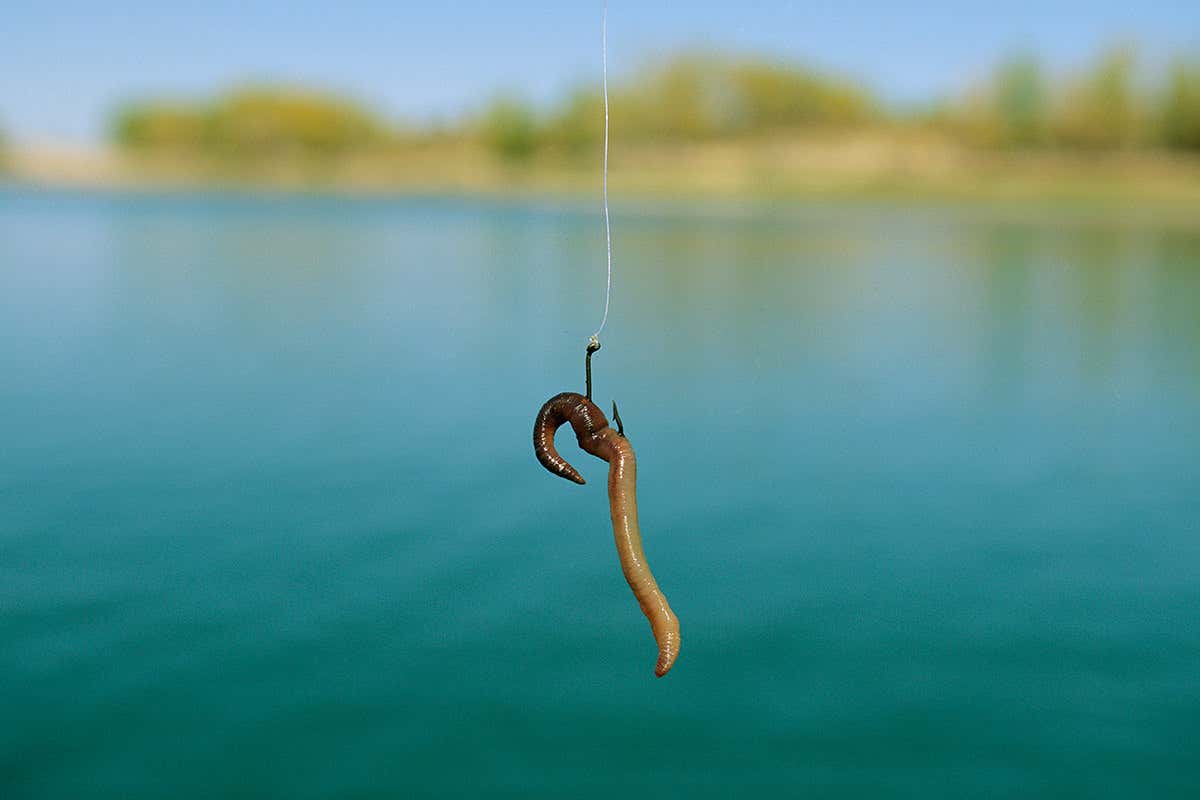
 www.newscientist.com
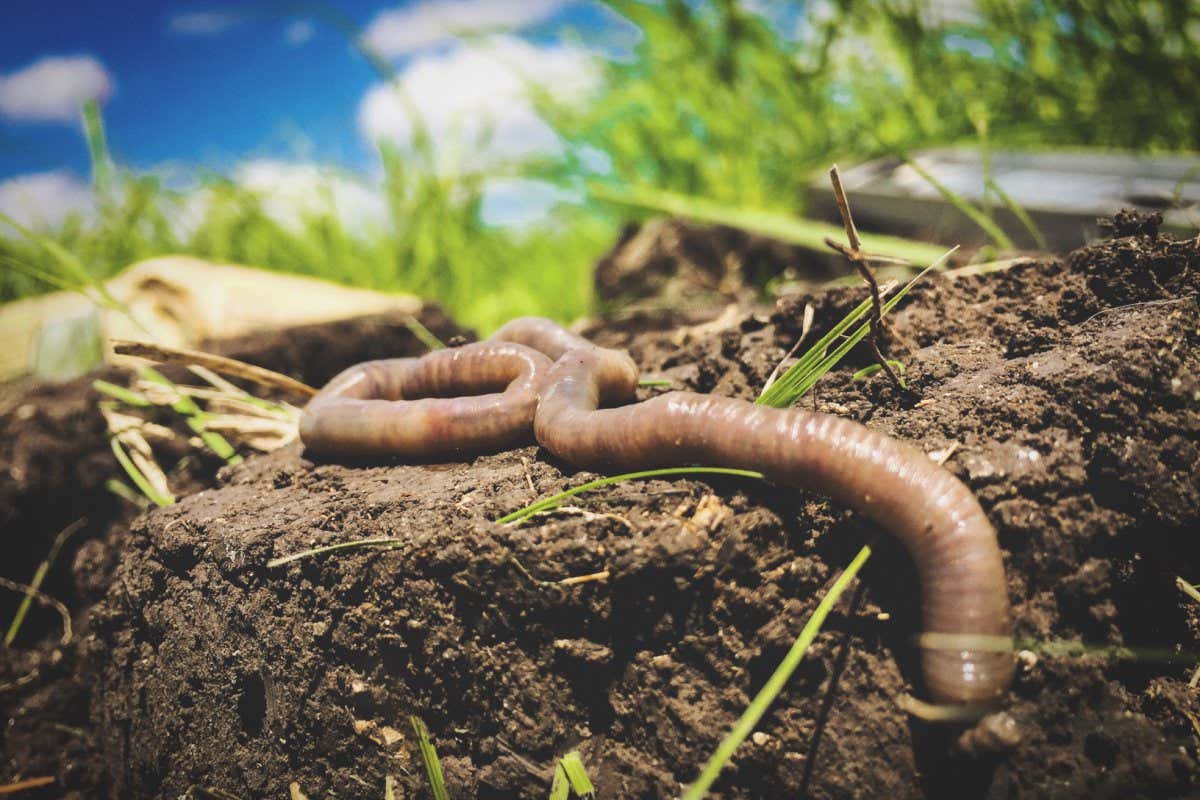 www.newscientist.com
https://ecosystemsontheedge.org/earthworm-invaders
https://www.npr.org/templates/story/story.php?storyId=9105956
Invasive earthworms threaten growth of new North American trees
Earthworms spread, by hook or by crook An invading horde is spreading across the northern forests of North America, gobbling seeds and altering forest ecosystems as it goes. Who are these marauding horrors? Humble earthworms. Despite their reputation as a gardener's friend and contributor to...
Alien earthworms have spread to almost all parts of North America
Invasive worms, considered a major threat to native ecosystems, have been found in 97 per cent of areas for which there are records in North America
Last edited:
rocksnstumps
5 year old buck +
Under the northern glacial areas, most all the worms were toast.Where are the references to the numbers please?
At one point in the post worms were not existant. The end of the post it states the native worms can’t compete.
I would sure like to read more about the science behind these claims.
Thanks
The native worms that were left down south below the glacial advance can't compete with the European and Asian worms either that were introduced as early as the 1600s.
bigboreblr
5 year old buck +
NY had the same warning. Supposedly their heart / head section has a lighter than normal ring. They also are faster too.
Angus 1895
5 year old buck +
When I was studying about rotational grazing and pasture management I read that a healthy pasture will sustain equal mass of worms below the ground as cattle above it. After reading this I really dropped the amount of nitrogen I would apply both in total amount and per application.
I started seeing more worms in the paddocks.
Reading about birch trees, AI google states they tolerate little shade and usually are growing where the ground has been disturbed. Perhaps the decline in birch trees ( if that is even real) is due to the management of not disturbing an area.
I have on my property aspen trees, they propagate mostly through the colonization of the roots. I just plant root pieces to start another colony.
I believe that the earthworms efforts to improve aeration and the more efficient decomposition of organic litter in the soil will, in the end , produce a net benefit to the soil.
I also believe agriculture in North America would be much less productive without them walleye catching invaders from Europe.
I started seeing more worms in the paddocks.
Reading about birch trees, AI google states they tolerate little shade and usually are growing where the ground has been disturbed. Perhaps the decline in birch trees ( if that is even real) is due to the management of not disturbing an area.
I have on my property aspen trees, they propagate mostly through the colonization of the roots. I just plant root pieces to start another colony.
I believe that the earthworms efforts to improve aeration and the more efficient decomposition of organic litter in the soil will, in the end , produce a net benefit to the soil.
I also believe agriculture in North America would be much less productive without them walleye catching invaders from Europe.
Last edited:

Telemark
5 year old buck +
I have read this fear mongering about wormsfor 20 years and have still not seen anything concrete. Everywhere I go in deciduous forests, the ground is covered with leaves.
I'm sure there are foreign species of worms around, but so far I have only seen speculation that it might be a problem, possibly, somewhere, eventually, but we're not sure.
Now, invasive plants, those can completely take over an area in a few years.
I'm sure there are foreign species of worms around, but so far I have only seen speculation that it might be a problem, possibly, somewhere, eventually, but we're not sure.
Now, invasive plants, those can completely take over an area in a few years.
rocksnstumps
5 year old buck +
No arguments that farmers, gardeners, urban lawn folks, and food plotters everywhere are in love with worms and their pro benefits.
If however one is talking about expansive northern forested areas that don't support agriculture think Maine, northern Minnesota, northern Wisconsin etc. It's trees and more trees. No Ag for miles and miles. In those environments the science is fairly settled, worms suck.
So if you go far enough north and see lots of leaf debris everywhere, just means that worm invasion isn't there yet. Still true for a fair amount of the north country thank goodness. Kinda like I still have a bunch of ash trees totally fine on my land. Read about Emerald ash borer at least 20 yrs ago. Must be a farce.....no, no, no. Just not here yet. In fact 40 miles away the ash have started dying in mass and just a matter of time.
No gonna keep trying to counter arguments that go against Mom, apple pie, 10,000 lawyers at the bottom of the ocean, and worms. Could post link after link on the related studies but I'm done here. Good thing worms do move slow unless folks start helping.
If however one is talking about expansive northern forested areas that don't support agriculture think Maine, northern Minnesota, northern Wisconsin etc. It's trees and more trees. No Ag for miles and miles. In those environments the science is fairly settled, worms suck.
So if you go far enough north and see lots of leaf debris everywhere, just means that worm invasion isn't there yet. Still true for a fair amount of the north country thank goodness. Kinda like I still have a bunch of ash trees totally fine on my land. Read about Emerald ash borer at least 20 yrs ago. Must be a farce.....no, no, no. Just not here yet. In fact 40 miles away the ash have started dying in mass and just a matter of time.
No gonna keep trying to counter arguments that go against Mom, apple pie, 10,000 lawyers at the bottom of the ocean, and worms. Could post link after link on the related studies but I'm done here. Good thing worms do move slow unless folks start helping.
Similar threads


- Replies
- 15
- Views
- 1K

