Howboutthemdawgs
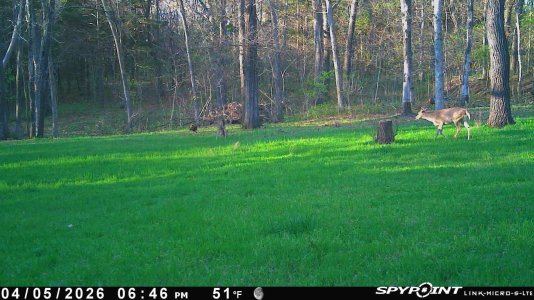
5 year old buck +
I see you and I are representing the vintage class of 4 wheelers. What year? Mines a 2005


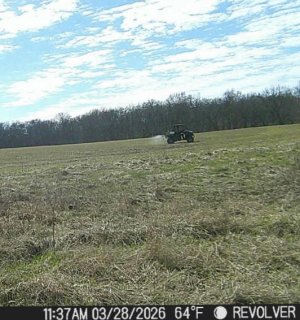
1999 Kawasaki Prairie 400 4x4 automatic. I've had it about 20 years and it has been 100% care free, despite being used hard and put away wet on too many occasions. Just turned 8980 miles.I see you and I are representing the vintage class of 4 wheelers. What year? Mines a 2005
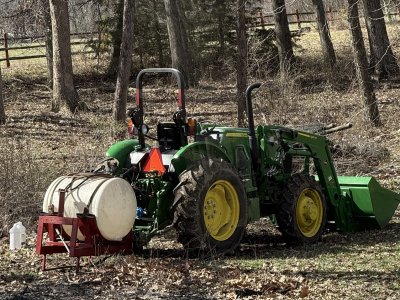

The fields are fallow. It had been on a corn/soy rotation, with soy the past two years. I pulled it primarily due to the farmer, who 1) planted soy two years in a row and 2) refused to use cover crops, despite that being in our verbal agreement. Once the CRP is established, I know I will be glad of the change, as it will be great for wildlife in the area.That really stinks. What is currently in your fields now?
I agree (using hindsight). The cost share is 50/50, which will help, but not with out of pocket. Given the cost of the seed, plus planting and pre-treatment, getting the CRP in the ground is running $288/acre plus a three days off days off work (so far).Ah I feel for you! I am thinking you could have saved yourself time if you hired it out from the get go. Assuming cost share fully covers your expenses, that could’ve been the way to go initially? I applaud your commitment though! I know these native grass mixes can be finicky to get in.

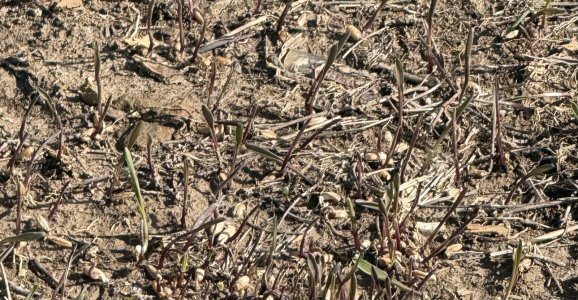
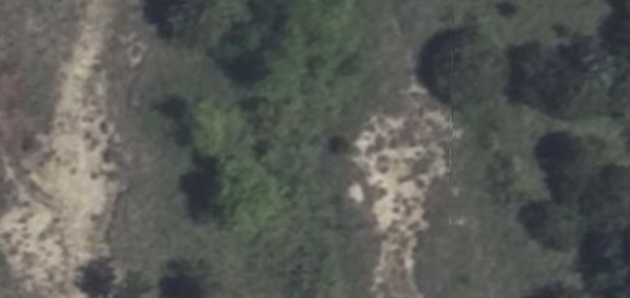
There are breeding populations on pheasants in the county and we have seen covey of quail on the property. The CP2 mix of CRP should be good for deer bedding and quail.Sooner than expected, that’s good to hear. Do you plan on quail/pheasant hunting it at all? Not sure if you have pheasants in MO. It’ll be great cover for lots of species.

There are breeding populations on pheasants in the county and we have seen covey of quail on the property. The CP2 mix of CRP should be good for deer bedding and quail.
Since pheasants are a non-native species that were introduced to the US, the CRP focus is upon native birds, such as the bobwhite quail. Once we start seeing established coveys, I plan to hunt them. I am also putting in a one acre strip of sunflowers for dove.
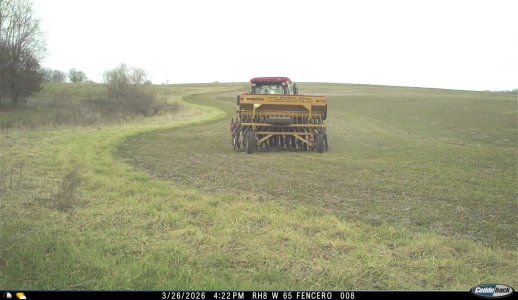
I like the idea of the sunflower/millet. My plan is to drill the sunflowers around the first of May. I understand the millet should be broadcast about a month later. This will be my first dove plot, which will also promote appropriate deer movement.
My dove hunting friends here in Missouri recommend giving the sunflowers more time to mature to ensure readiness for the September 1 opener. Most of the millet seed in this area is Japanese Millet, which grows faster than Sunflower by about a month or two. I might consider planting 5' rows of sunflowers in May, followed by a 5' rows of millet in June before a good rain. The acre dove strip will be approx 300 yards x 18 yards, which would allow two (or three) hunters (assuming the crops work).The one I was talking about had a row of millet on each side of the sunflowers, and then they tilled a row between the millet rows.
So it would be tilled, millet, sunflower, millet, tilled. The tilled rows gave them a place to land, then they would walk around eating seeds.
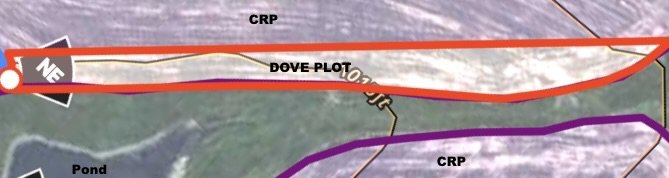
Deer might wipe out sunflowers before season opens.My dove hunting friends here in Missouri recommend giving the sunflowers more time to mature to ensure readiness for the September 1 opener. Most of the millet seed in this area is Japanese Millet, which grows faster than Sunflower by about a month or two. I might consider planting 5' rows of sunflowers in May, followed by a 5' rows of millet in June before a good rain. The acre dove strip will be approx 300 yards x 18 yards, which would allow two (or three) hunters (assuming the crops work).
View attachment 90929