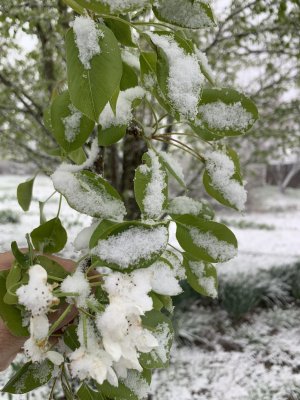
I'm working on it. I'm a bit late to the game, and some of the older ones must be over 30 feet tall. They grow with much better form than Bradfords. I'm killing off all the mature ones I find that I can't graft. The biggest one I poisoned was about 12" in diameter and required multiple doses of herbicide, but it seems to be dead.
The problem is they produce thousands of little pears filled.with seeds, and the.birds spread them all over. This winter I found scores more in fields where the grass had lodged after a big snow.
I've top worked dozens already, and Ive started killing off the small ones that are too close to those I top worked. My plan was to save some little ones to dig up for rootstock, but there's no shortage, so I'm just grafting and slaughtering en masse for the time being. I'll worry about digging up rootstock next year.
Another part of the strategy is to graft the earliest blooming pears I can find. If I can overlap bloom time with the ultra-early Callery trees, I can get some genes into their offspring and eliminate the pure Callery strains. That should eliminate the spreading by birds and allow a continuous shift in genetics throughout the gene pool of the entire population. Even a tree bearing fruit with Callery characteristics but too large for birds will shift the tree from bird food to deer food. I've found one that has golf-ball sized fruit, which I will graft onto others that will hopefully pollenize the early Callery trees and prevent their offspring from becoming bird pears.