Would appreciate you letting us know how it works. Stay warm!I will try tomorrow in NH!

-
If you are posting pictures, and they aren't posting in the correct orientation, please flush your browser cache and try again.
Edge
Safari/iOS
Chrome
You are using an out of date browser. It may not display this or other websites correctly.
You should upgrade or use an alternative browser.
You should upgrade or use an alternative browser.
Any experience using Dr Craig Harpers cocktail in freezing weather.
- Thread starter BC Buck
- Start date

Telemark
5 year old buck +
Will the garlon 3a and arsenal AC dissolve in antifreeze?
Most RV antifreeze is propylene glycol and ethanol. Both of these molecules are considered polar.
Garlon 3 should dissolve in RV antifreeze. Garlon 3 is an amine form of Troclopyr. It is a polar molecule, so it should dissolve fine in ethanol and propylene glycol. The ester form of Troclopyr should dissolve in alcohol because alcohol has a polar side and a nonpolar side. The ester form of Troclopyr would dissolve better in diesel.
Arsenal is amazapyr, which Google says is polar. It should dissolve fine in water, alcohol, and propylene glycol.

Tangler
5 year old buck +
Well I could not go today (schedule change) but I made a mixture to try. I looked in garage and could not find any spare antifreeze but I found another thing to try: Windshield wiper fluid! Says it is good to -20 so we will see!
Mixed 50% triclopyr (garlon 3a), 40% windshield fluid & 10% imazapyr (arsenal AC). All are water soluble polar molecules so we will see!!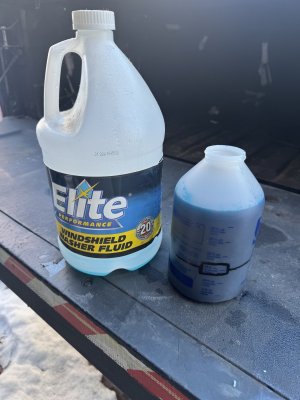
Mixed 50% triclopyr (garlon 3a), 40% windshield fluid & 10% imazapyr (arsenal AC). All are water soluble polar molecules so we will see!!
Brilliant idea, and will try. I will not buy the stuff with additive making water bead like raindance. Could you try small squirt bottle hand pump to let us know if will work and what temp you tried?Well I could not go today (schedule change) but I made a mixture to try. I looked in garage and could not find any spare antifreeze but I found another thing to try: Windshield wiper fluid! Says it is good to -20 so we will see!
Mixed 50% triclopyr (garlon 3a), 40% windshield fluid & 10% imazapyr (arsenal AC). All are water soluble polar molecules so we will see!! View attachment 88759
As soon as saw your idea something came to mind about RV antifreeze. Officially RV antifreeze idea is a bust below 20 degrees.
AI
RV antifreeze typically begins to thicken and develop ice crystals—often described as a slushy or "snow cone" consistency—between +7°F and +20°F (-14°C to -7°C).
While it may look frozen or feel solid at these temperatures, it is performing as intended. It is important to distinguish between the slush point and the burst point:
- Slush Point (+7°F to +20°F): The temperature where the liquid thickens and crystals form. At this stage, it will not flow through a water pump and could damage it if you try to run it.
- Freeze/Solid Point (~ -10°F to -15°F): The temperature where standard -50°F rated antifreeze may appear completely solid.
- Burst Point (-50°F or -100°F): The rating on the bottle (e.g., -50°F) refers to the temperature at which the liquid will finally expand enough to burst a pipe. Unlike water, RV antifreeze contracts as it cools and only expands at extremely low temperatures.
Last edited:
omicron1792
5 year old buck +
I would just put a little antifreeze and not replace all the water. Maybe that’s best of both worlds.
Pure rv antifreeze starts freezing at 20F. Dont know if 40% automotive antifreeze would mix OK.I would just put a little antifreeze and not replace all the water. Maybe that’s best of both worlds.
Tangler
5 year old buck +
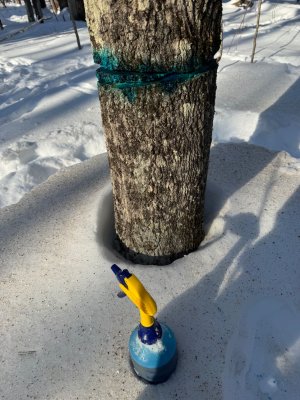
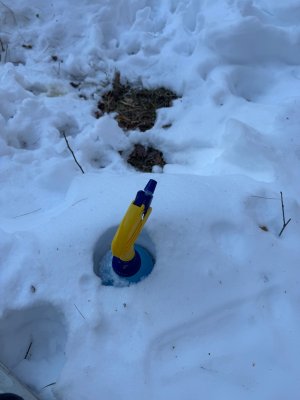
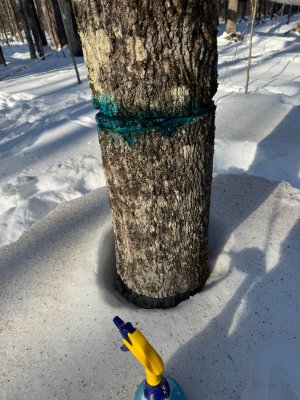
Replacing the water with windshield wiper fluid worked great! The bottle says -20 and I used today for 3 hours. No ice. No clogging. No problems. I will leave some outside in single digits overnight and check in the morning.
Attachments
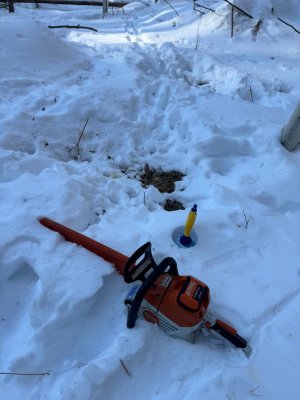
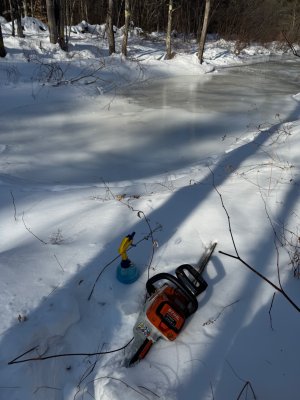
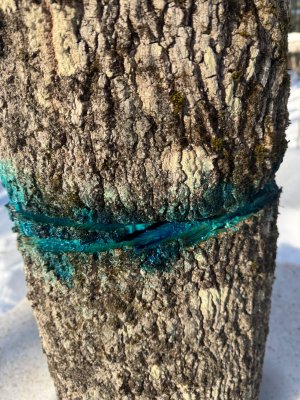
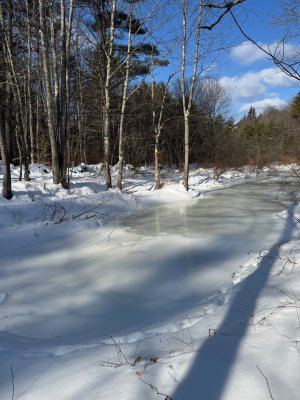
Tangler
5 year old buck +
Chemistry info:
The windshield washer fluid uses methy-alcohol = methanol (CH3-OH) as the main solvent. The freezing point of methyl alcohol (methanol) is extremely low, around -97.6 °C (-144 °F), making it an effective antifreeze.
Triclopyr 3 (Garlon 3a) is a polar carboxylic acid (water soluble, soluble in methy-alcohol).
Imazapyr (arsenal AC) is also a water soluble polar molecule (nicotinic acid).
More info:
Imazapyr is a non-selective herbicide with the chemical formula

C13H15N3O3
. It is an imidazolinone compound characterized as 2-(4-isopropyl-4-methyl-5-oxo-2-imidazolin-2-yl) nicotinic acid, with a molecular weight of

261.28g/mol
.
Here is more info on Garlon 3a:
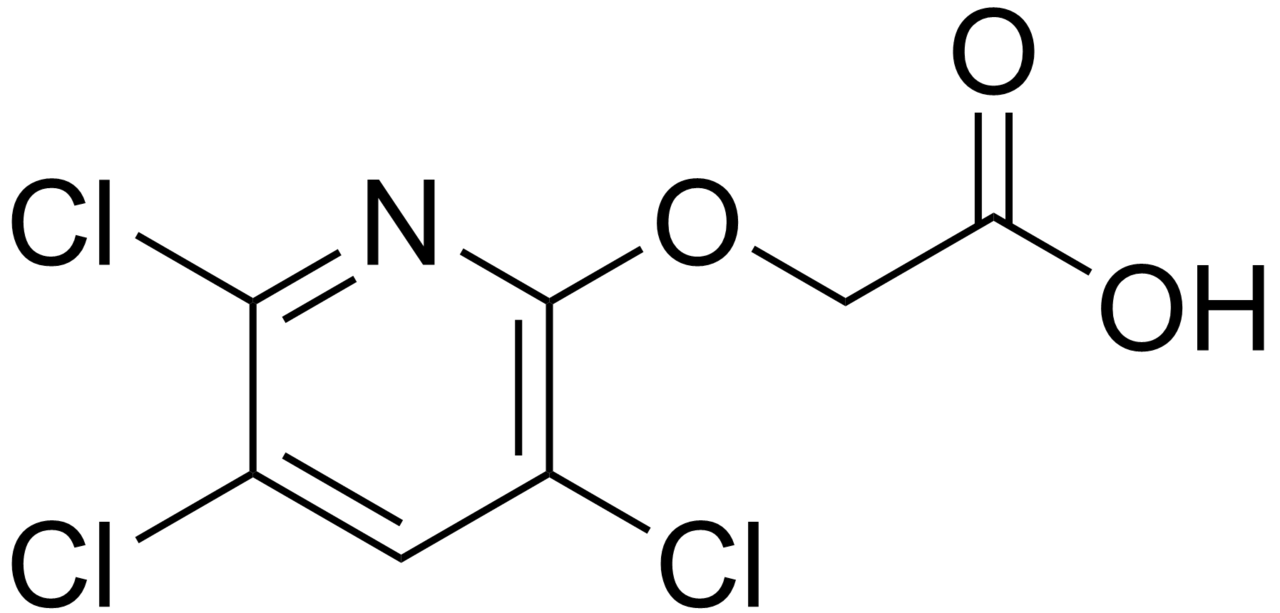
 en.wikipedia.org
The windshield washer fluid uses methy-alcohol = methanol (CH3-OH) as the main solvent. The freezing point of methyl alcohol (methanol) is extremely low, around -97.6 °C (-144 °F), making it an effective antifreeze.
Triclopyr 3 (Garlon 3a) is a polar carboxylic acid (water soluble, soluble in methy-alcohol).
Imazapyr (arsenal AC) is also a water soluble polar molecule (nicotinic acid).
More info:
Imazapyr is a non-selective herbicide with the chemical formula
C13H15N3O3
. It is an imidazolinone compound characterized as 2-(4-isopropyl-4-methyl-5-oxo-2-imidazolin-2-yl) nicotinic acid, with a molecular weight of
261.28g/mol
.
Here is more info on Garlon 3a:
Triclopyr - Wikipedia
Last edited:
You had me at froze solid.Update: left spray bottle outside in single digit temperatures overnight and …….drum roll ……frozen solid, JUST KIDDING! Remained liquid, still spraying, no ice no clogging.
This is enough for me. I have a solution for my problem!