• If you are posting pictures, and they aren't posting in the correct orientation, please flush your browser cache and try again.

    Edge
    Safari/iOS
    Chrome

Alfalfa monoculture next year Z4

Yeah, I have not splurged for roundup ready alfalfa. It's not the cost that has kept me from pulling the trigger yet, but logistics and need. I will definitely be planting some in a year or two.

 
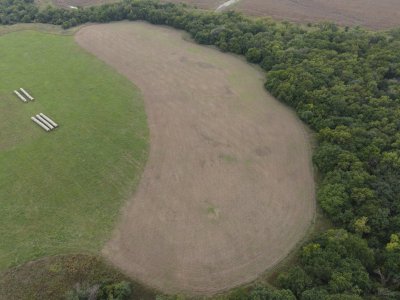
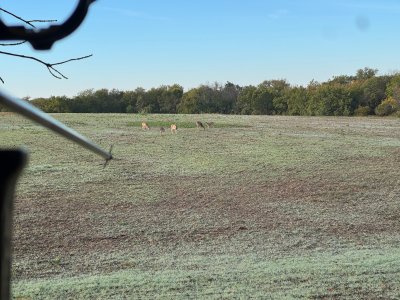
`I bought this farm in June 2025. 150 acres of ag but knew I wanted to add some alfalfa and farmer was happy to do it. He planted 8 acres in August in native grass hay field. Was looking great until late September until army worms found it. They wiped out about 1/3 of it. He will drill in the bare areas again this spring. This should be a key component for food for my farm.
 

Attachments

  • alfafa field.JPG
    alfafa field.JPG
    369.7 KB · Views: 16
  • alfalfa deer.JPG
    alfalfa deer.JPG
    591.8 KB · Views: 16
Foggy I did some more research into seed locally and I’m coming around to your juice/squeeze comment.

Up here I’m told that RR ready or not, I’m probably only going to get about 4 years out of it anyway. So since I have more than one field I rotate in and out, I’m probably going to go with standard seed.

I called around and learned that I can indeed buy the RR seed after I sign a “contract” of some sort. It costs $528 for 50# and you have to buy a whole bag.

Non-RR seed is 4 bucks a pound.
 
Question on alfalfa. There seem to be hundreds of cultivars/hybrids. How does one go about choosing a smart one for their location, regarding DR, fall dormancy ratings, longevity, winter hardiness, etc.? Calls to local agencies dismiss such concerns if the alfalfa is "just" for deer. Our camp would like to get the most bang for our buck when planting alfalfa.
 
Ok I'm in India currently looking at fields of super lush barley and what's interesting is the fields of mustard thick and 4 feet high. Nothing can grow under bit. Curious on anyone's thoughts if mustard is invasive or could be roller crimped for a huge carbon duff layer?
 
Question on alfalfa. There seem to be hundreds of cultivars/hybrids. How does one go about choosing a smart one for their location, regarding DR, fall dormancy ratings, longevity, winter hardiness, etc.? Calls to local agencies dismiss such concerns if the alfalfa is "just" for deer. Our camp would like to get the most bang for our buck when planting alfalfa.
The Land Grant University in your area likely has some cultivar or performance trials. I was able to find some from Mizzou for our farms near there. Here is what I would search: "alfalfa cultivar performance trial YOUR STATE". Adding "edu" or "extension" to the search string should help prioritize university webpages. Another great source is using scholar.google.com. This is probably overkill for what most are looking.
 
The guy that owns my local feed n seed has lived and farmed here his whole life. He works with every local farmer and food plotter at some level.

I’ve already gone around and around on seed selection and I still have time to change my mind …..but I’m highly considering going with the one he recommends and has had success with in my area. He carries it self serve by the pound and he says it’s a grazing variety. Non RR ready.

I’m thinking I’ll save some money on seed to offset fertilizer costs….which are usually fairly hi where I’m at. Lots of p and k needed.
 
Be careful with the timing of that last cut. When I first bought my place the neighbor was haying some fields. He invested in establishing an alfalfa field. It was beautiful until after the last cut temps plummeted. It winter killed and was gone the next year.
Exactly why I do not plant alfalfa. Unless planting big field or LOW deer density will not last winter. Even with big fields where the deer enter is browsed down to low before winter and will die.
AI
Yes, alfalfa can die or suffer severe injury if cut too short in the fall, particularly during the critical 5–6 week "rest period" before the first killing frost (roughly mid-Sept to late-Oct). Cutting too low removes insulating stubble, depletes root energy reserves, and increases risks of freezing, drying, and frost heaving.
Key Considerations for Fall Cutting:
  • Optimal Height: If you must cut in late fall, leave at least 6 inches of stubble to protect the crown and catch insulating snow.
  • The "Rest" Period: Avoid cutting during the 5–6 weeks before a killing frost (typically 25°F or less). Cutting then forces the plant to use up energy reserves for regrowth, leaving it vulnerable to winter death.
  • Timing: The safest time to cut is after a killing frost, when the plant is dormant and no longer trying to regrow.
  • Risks: Short, late-cut alfalfa reduces root carbohydrates, which can lead to poor, weak, or zero regrowth the following spring.
To minimize risk, allow the plant to grow naturally in late autumn to ensure it can survive the winter.
 
Hey SD…..can you tell us more about Sulphur Sulfate for alfalfa? I see an application rate between 15 and 25# per acre, depending on soil type, is typical. It can be applied at the time of planting (unlike boron).

There appears to be numerous sources and all are relatively fast-acting. What and how have you applied it before in a food plot scenario?
 
Hey SD…..can you tell us more about Sulphur Sulfate for alfalfa? I see an application rate between 15 and 25# per acre, depending on soil type, is typical. It can be applied at the time of planting (unlike boron).

There appears to be numerous sources and all are relatively fast-acting. What and how have you applied it before in a food plot scenario?

Gypsum

200 lbs/ac per year will keep you full. If you’re gonna stay-green out there, you don’t need it every year if you’re also mixing with other perennials and timed annuals.

If you have low calcium, you can go higher, but you should have a good soil test to know when too much calcium may hit.

Don’t buy gimmick gypsum. Just find a place that has it in 40 lb bags for $10-20/bag. Top dress it and let it get rained in. Gypsum only goes down.


Sent from my iPhone using Tapatalk
 
Thank you! When I Google sulphur sulfate, all the hits come up as ‘elemental sulphur’ and recommend a much lower application rate. I also see potassium sulfate called out at that low 20# / acre rate. (That’s what I put on blueberries to DECREASE PH).

It’s a little confusing until you said just use gypsum!!!👍👍
 
Thank you! When I Google sulphur sulfate, all the hits come up as ‘elemental sulphur’ and recommend a much lower application rate. I also see potassium sulfate called out at that low 20# / acre rate. (That’s what I put on blueberries to DECREASE PH).

It’s a little confusing until you said just use gypsum!!!👍👍
It is that simple. Depending on what you're doing and how you plan to manage it, you may only ever need a dose the first couple seasons and then you can let it go.

I manage my plots as mixed unbroken perennial systems. Once I've got my pH right, and I've got my calcium to magnesium ratio in the acceptable range, I'll do 2 years of a maintenance gypsum rate, and then let it go. Once you get to about year 3 and you have decent organic matter, and moisture, you'll get 4 lbs/year per 1% of organic matter alone. Throw in a healthy earthworm population and high residue crops, and you'll have so much sulfate production, it'll never be an issue again.

Where it all goes off the rails is about year 5-6 when you have to deal with the grass encroachment.
 
Great stuff!! Thanks again sir!!

On my last soil test my organic matter was at 5.5%…..
 
Great stuff!! Thanks again sir!!

On my last soil test my organic matter was at 5.5%…..
Yeah, that'll do you a lot of good. Where are you located, and what else are you looking to put into that alfalfa plot?
 
I’m in zone 4 (-25 to -35)…Lake Superior snow belt in WI.

My field is about 1.25 acres and it’s a secluded corner of a 25 acre field, that’s farmed for clover/brome grass hay.

The plan is 100% alfalfa, except that I’ll probably put an 8’ wide brassica strip around the circumference for late fall.

***I just heard from my farmer that he plans to spread lime on my field this spring for his hay…..and he offered to hit my plots for me while he’s at it, free.My ‘natural’ PH in my plots seems to be around 6.7 or 6.8 without me doing anything, but to prep for my alfalfa I hit it with 1 ton/acre last fall. Obviously I haven’t tested it since then and I won’t before he spreads lime on frozen ground. Should I have him spread lime on this plot?
 
I’m in zone 4 (-25 to -35)…Lake Superior snow belt in WI.

My field is about 1.25 acres and it’s a secluded corner of a 25 acre field, that’s farmed for clover/brome grass hay.

The plan is 100% alfalfa, except that I’ll probably put an 8’ wide brassica strip around the circumference for late fall.

***I just heard from my farmer that he plans to spread lime on my field this spring for his hay…..and he offered to hit my plots for me while he’s at it, free.My ‘natural’ PH in my plots seems to be around 6.7 or 6.8 without me doing anything, but to prep for my alfalfa I hit it with 1 ton/acre last fall. Obviously I haven’t tested it since then and I won’t before he spreads lime on frozen ground. Should I have him spread lime on this plot?

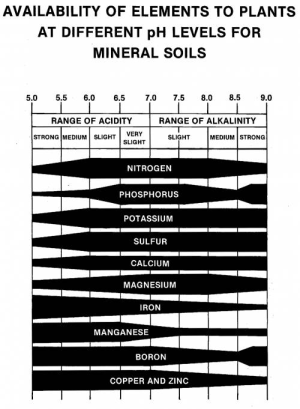
I wonder why he’s liming if they are already at that level? It’s harder to get micros out of the soil north of 6.5 pH.


Sent from my iPhone using Tapatalk
 
Back
Top